
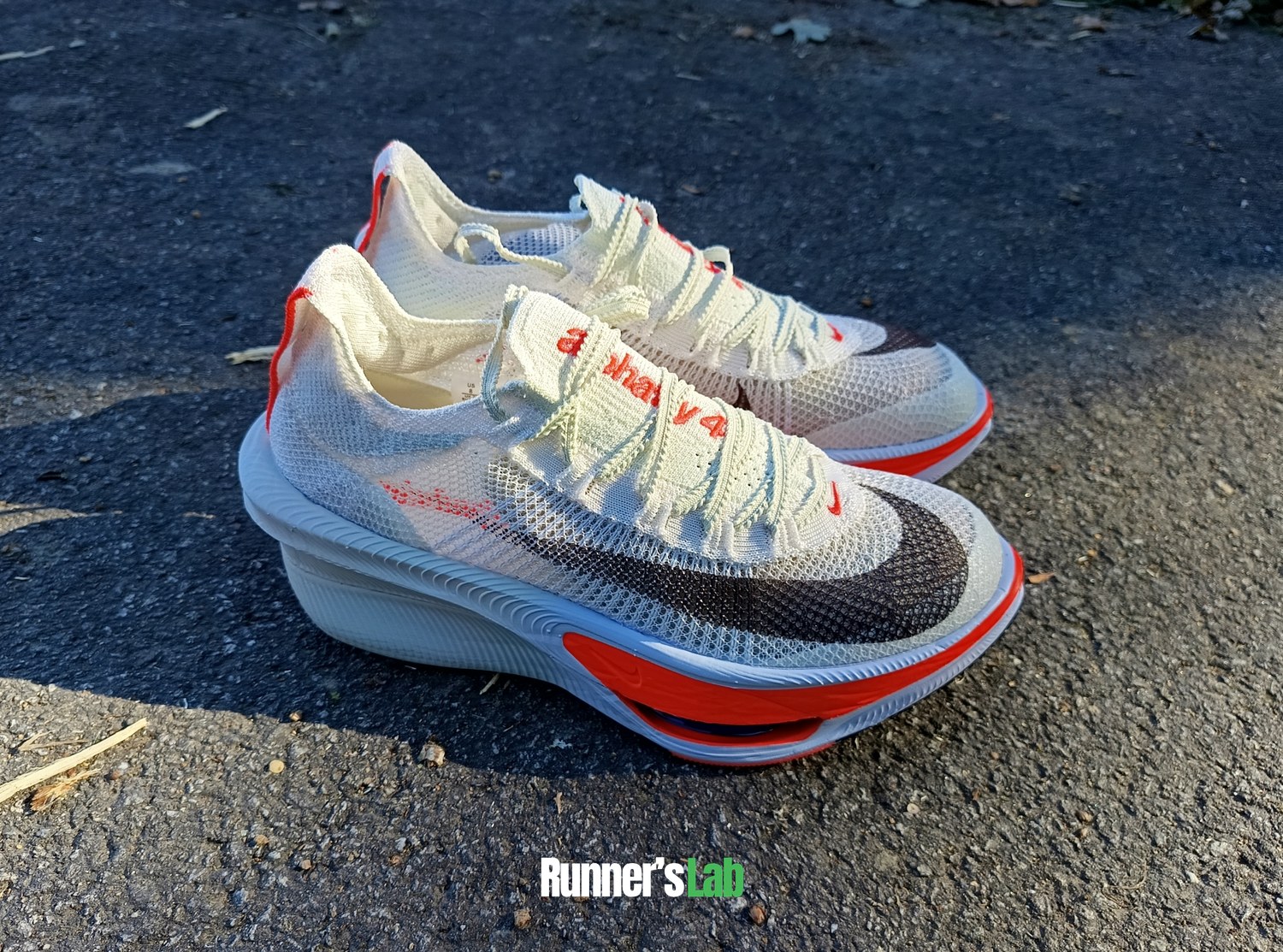
Cushioning
A wider Flyplate between new ZoomX LT and ZoomX: balanced, slightly plush cushioning built for the marathon.
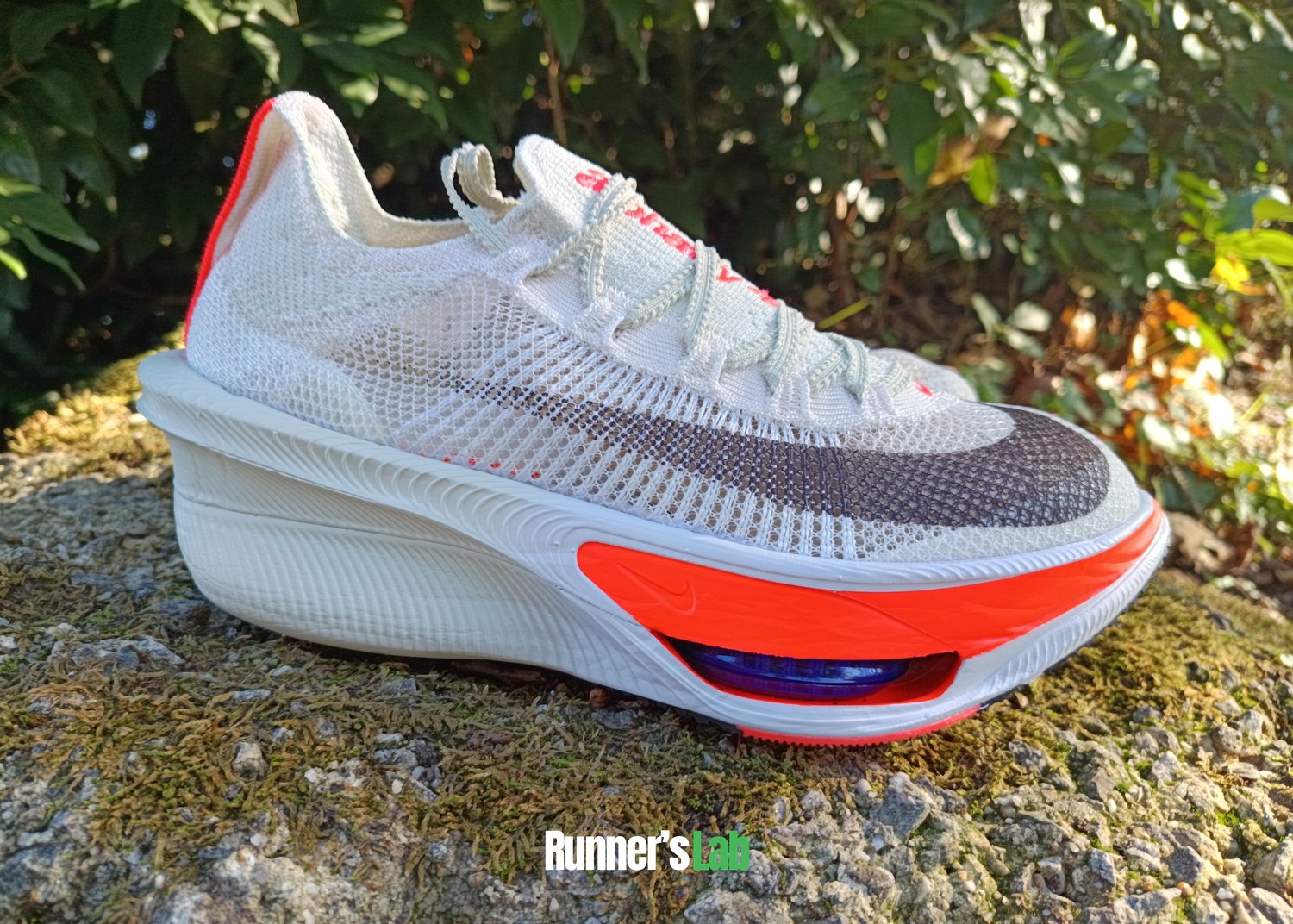
The midsole keeps the tried-and-true design: the Flyplate carbon plate sits between two layers of foam. The plate has been widened, like the base of the shoe, and keeps its spoon shape.
Two things are new: a brand-new ZoomX LT foam, up to 17% lighter with 8% more energy return according to Nike, and redesigned Air Zoom units. The ZoomX LT on top is still a Peba foam, expanded with gas in the lab, which is what makes it so light. Underneath, the original ZoomX layer is firmer: it provides stability at impact, returns energy forward and loads the plate well.
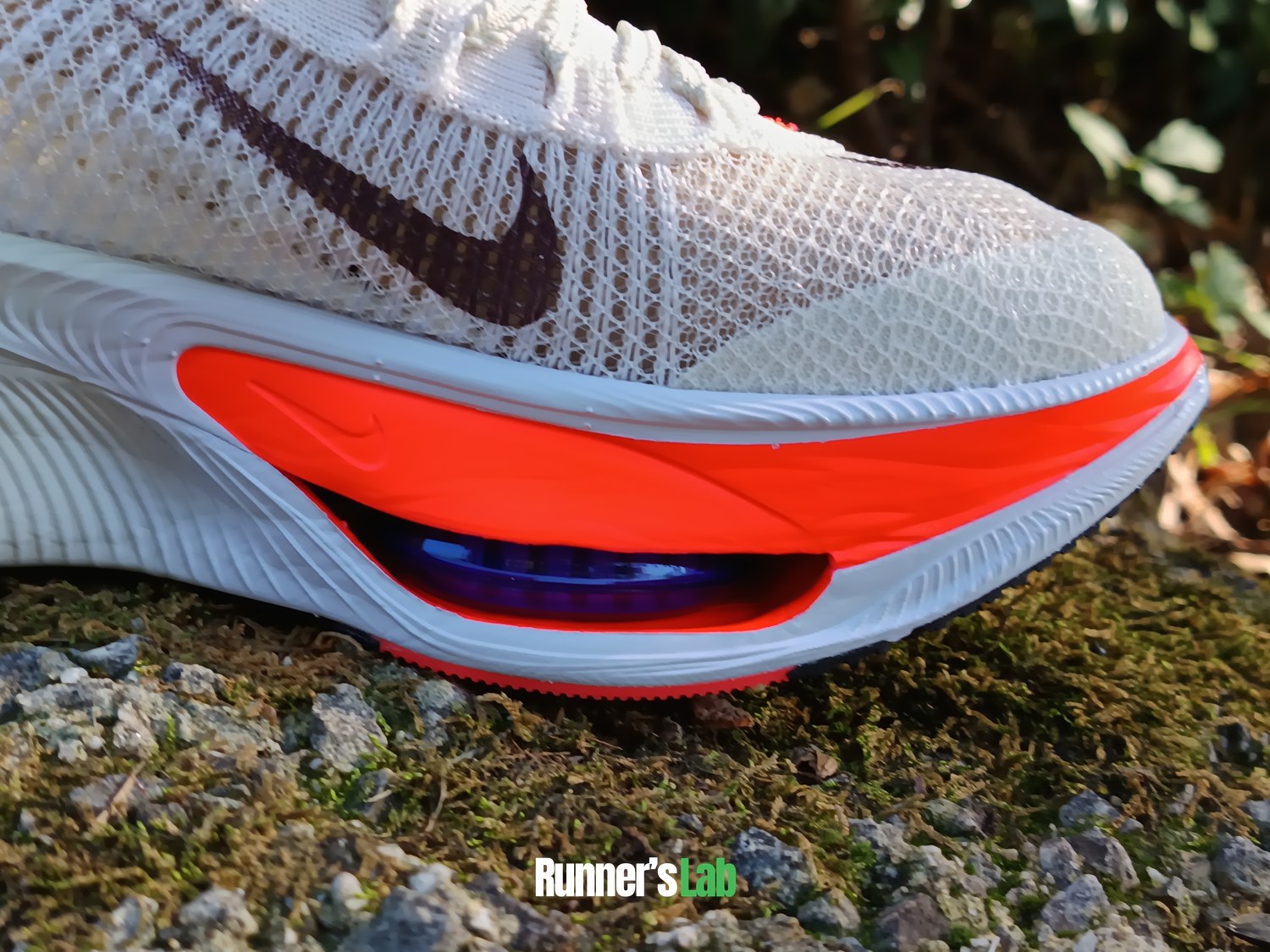
For the first time, the Air Zoom units are assembled with radio-frequency welding rather than heat welding. Nike says they are 30% lighter, more flexible and compress more evenly. They were also redesigned to stop the squeaking, but many runners still report it, and I noticed it myself. It is less pronounced than on the previous version, but it is not gone.
The ride feels very well balanced: slightly plush, never excessive. The stack is 39 mm at the heel and 31 mm at the forefoot, and shock absorption is excellent. No surprise: this is THE brand’s marathon shoe, especially since the Vaporfly 4 shifted toward shorter distances. On cushioning alone, there are no limits on distance or runner profile, and the 8 mm drop needs no adjustment.
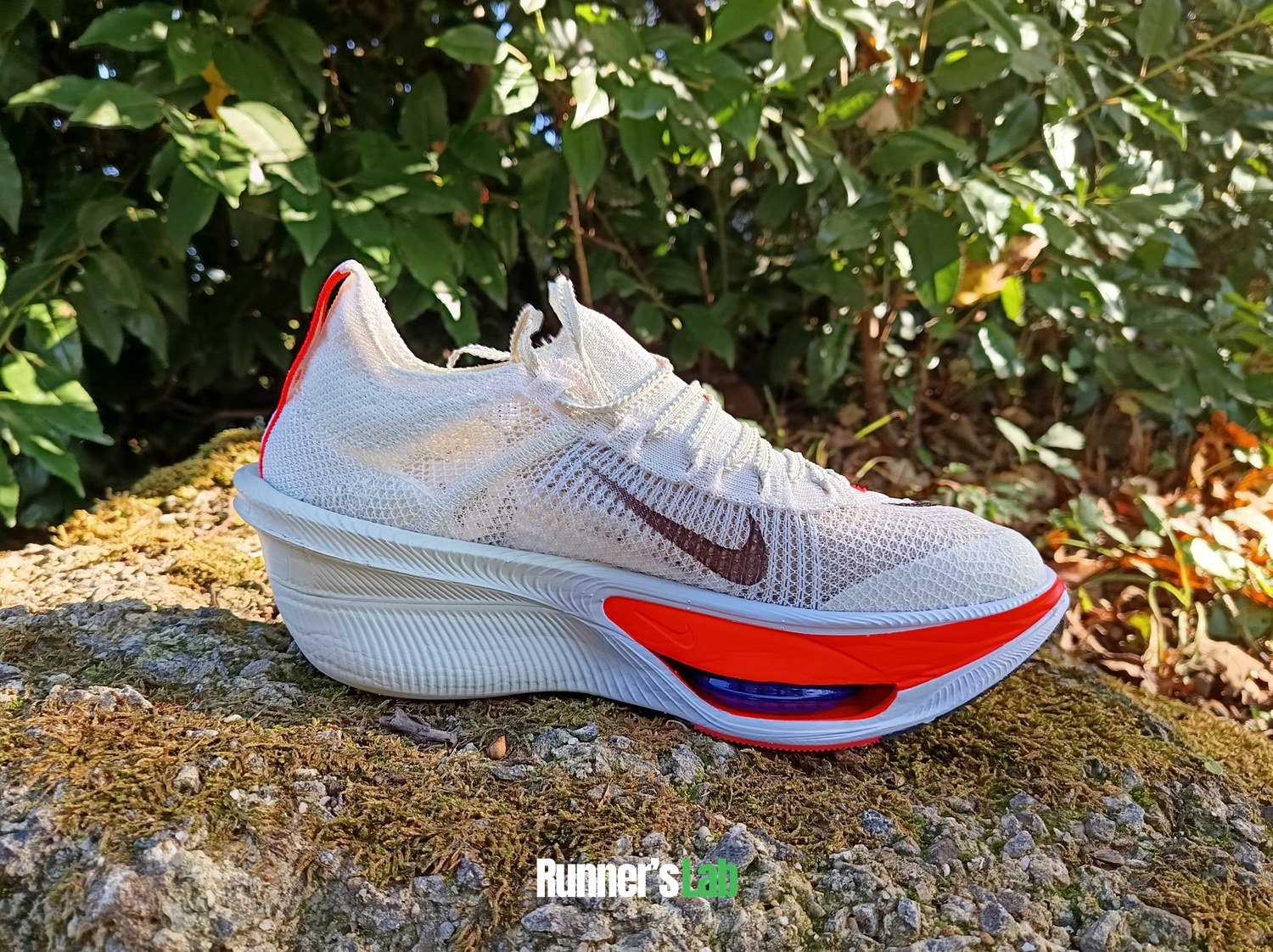
Weight is down to 187 g / 6.6 oz in size 42. That is impressive, even if direct rivals such as the Adios Pro 5 are lighter. The rocker is more moderate than on the V3, and much more than on many competitors, so the ride can sometimes feel rather “flat,” which some testers criticize. With the Air Zoom units, transitions stay very smooth, and the new foam returns a lot of energy: responsiveness is excellent.
Those Air Zoom units also keep the ride responsive late in a race, when your stride starts to falter. That mechanical feel, typical of the Alphafly, also lets you get the most out of the shoe without an aggressive forefoot strike, so it is (slightly) more forgiving than many of its competitors.
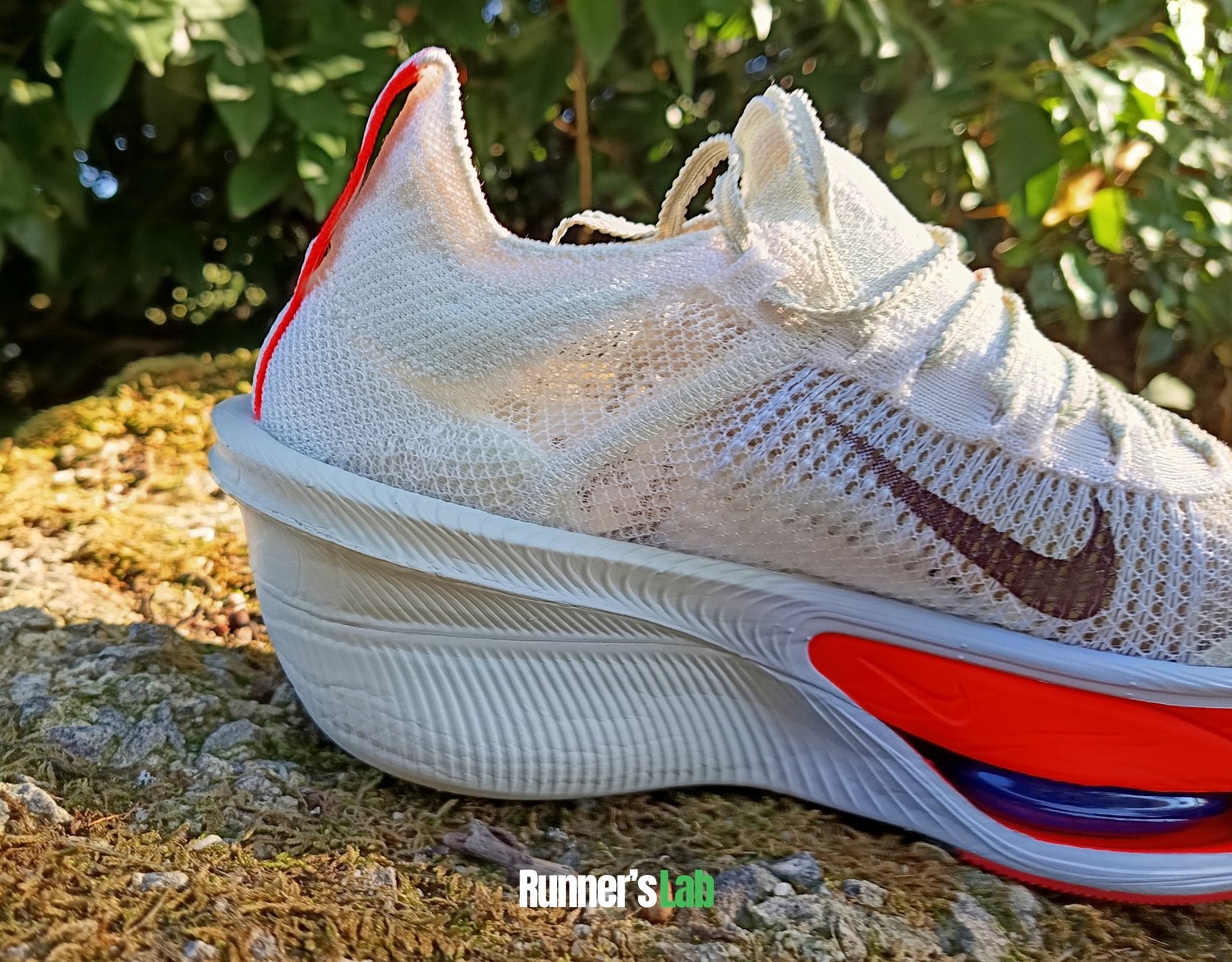
Designed for neutral runners, the shoe has no stability technology, but the widened base makes a real difference. Some testers complained about lateral stability. I find it fully comparable to the competition, so stability will not be an issue on this Alphafly 4.
Lockdown
A 10% lighter Atomknit upper with midfoot cables: still a total success, light and very breathable.
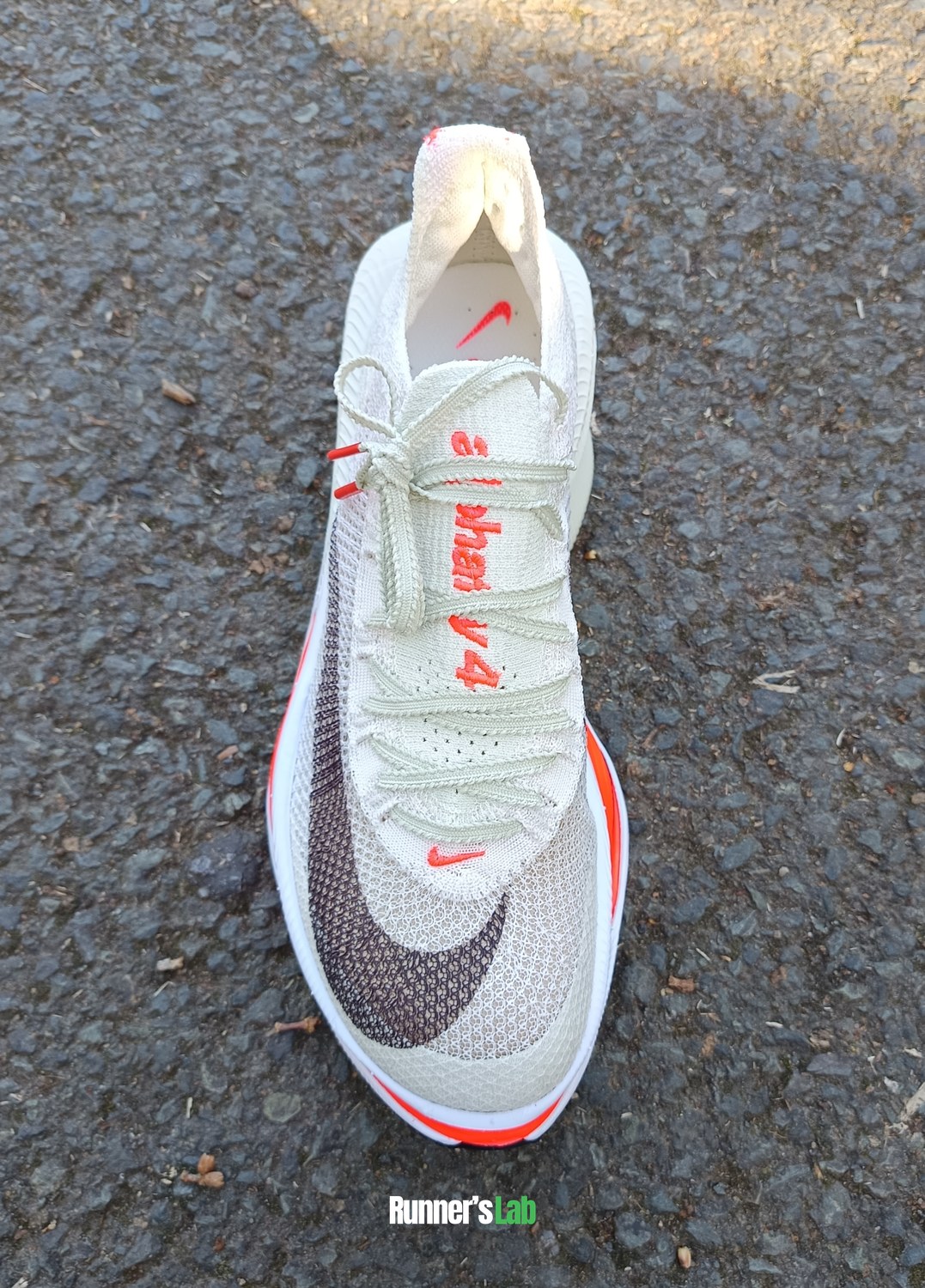
The Atomknit upper looks close to the previous one, which makes sense: it was already a masterpiece. It is 10% lighter with no loss of quality, and adds cables for better midfoot lockdown. It is so thin that you can see your socks through its micro-perforations, but that does not make it fragile.
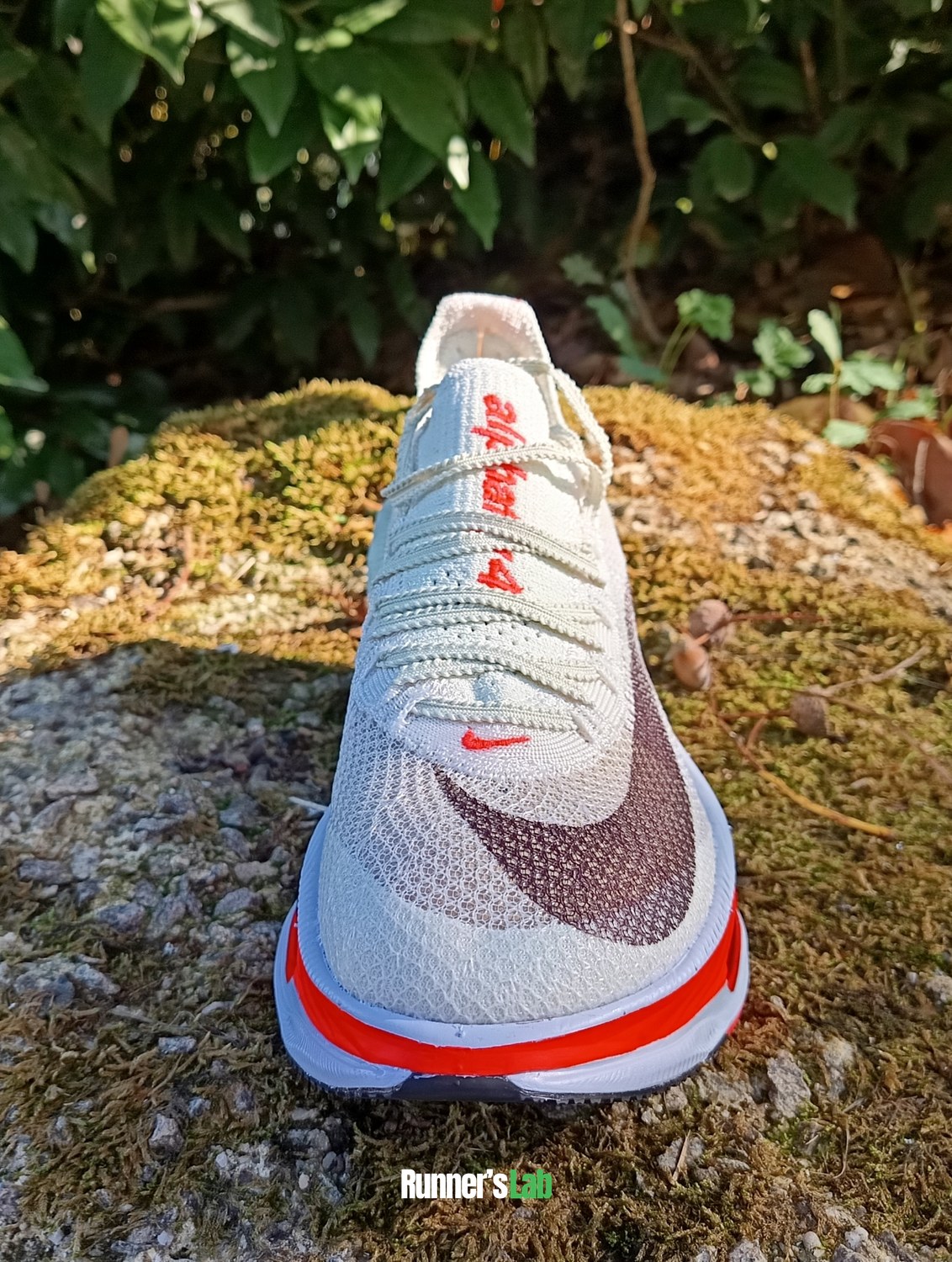
Ideal in warm weather, it protects less in winter, like most carbon rivals. It wicks moisture well and dries quickly. Comfort is remarkable for such a light shoe. It is not the slipper-like feel of a Nimbus: it is still a racing shoe. But you will have no trouble keeping it on for a whole marathon.
The fit is fairly snug, but less so than on some competing models, and the foot is not squeezed. The lockdown is precise, especially thanks to the midfoot cables, which give the shoe very good structure.
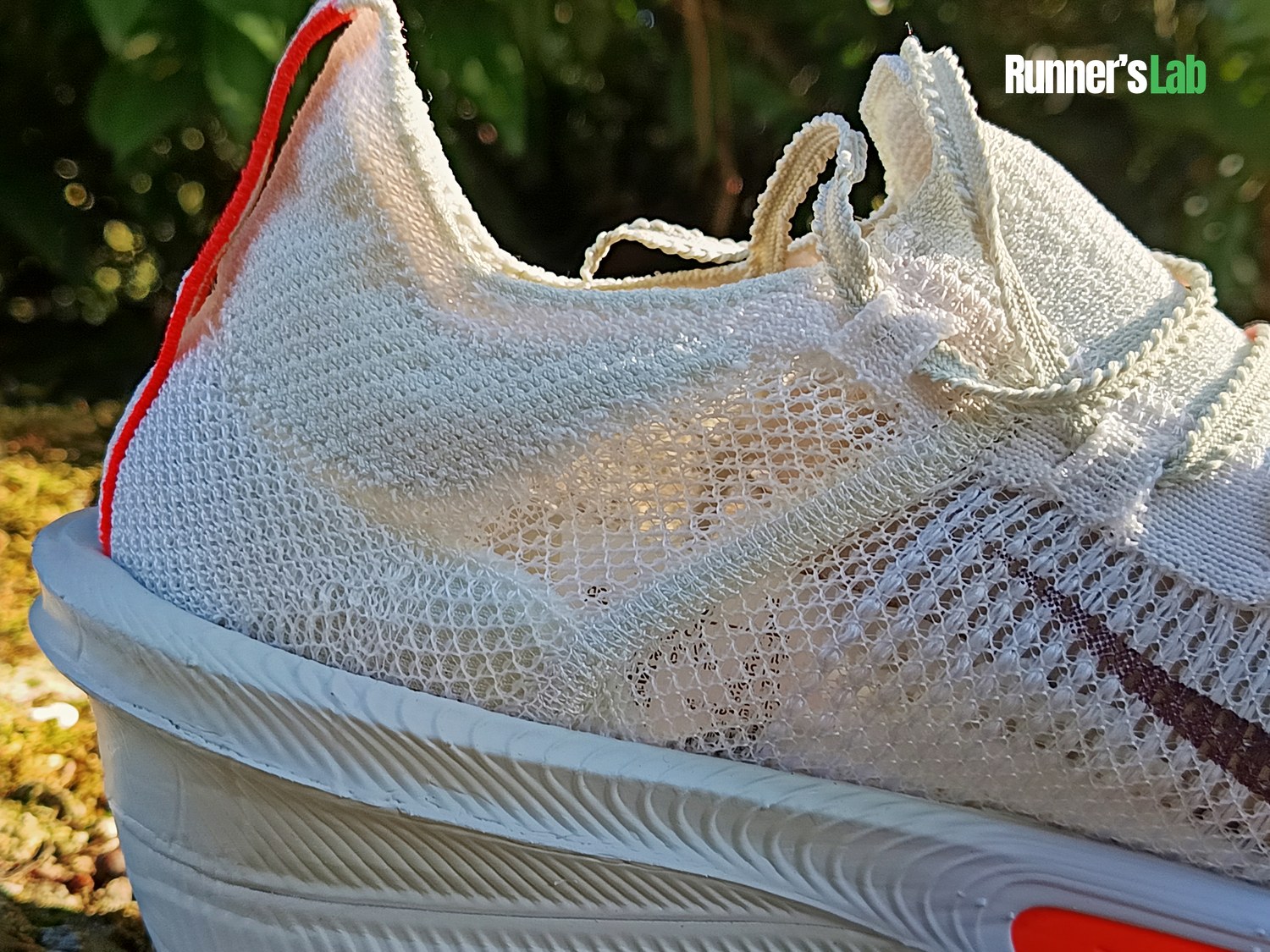
At the back, the semi-rigid heel counter holds the heel with no slippage. It is padded for comfort, and the tab at the back makes the shoe easy to put on. The tongue is an extension of the upper, as on every Nike Flyknit upper, and stays in place. The notched laces lock the foot down securely. The sockliner is not removable.
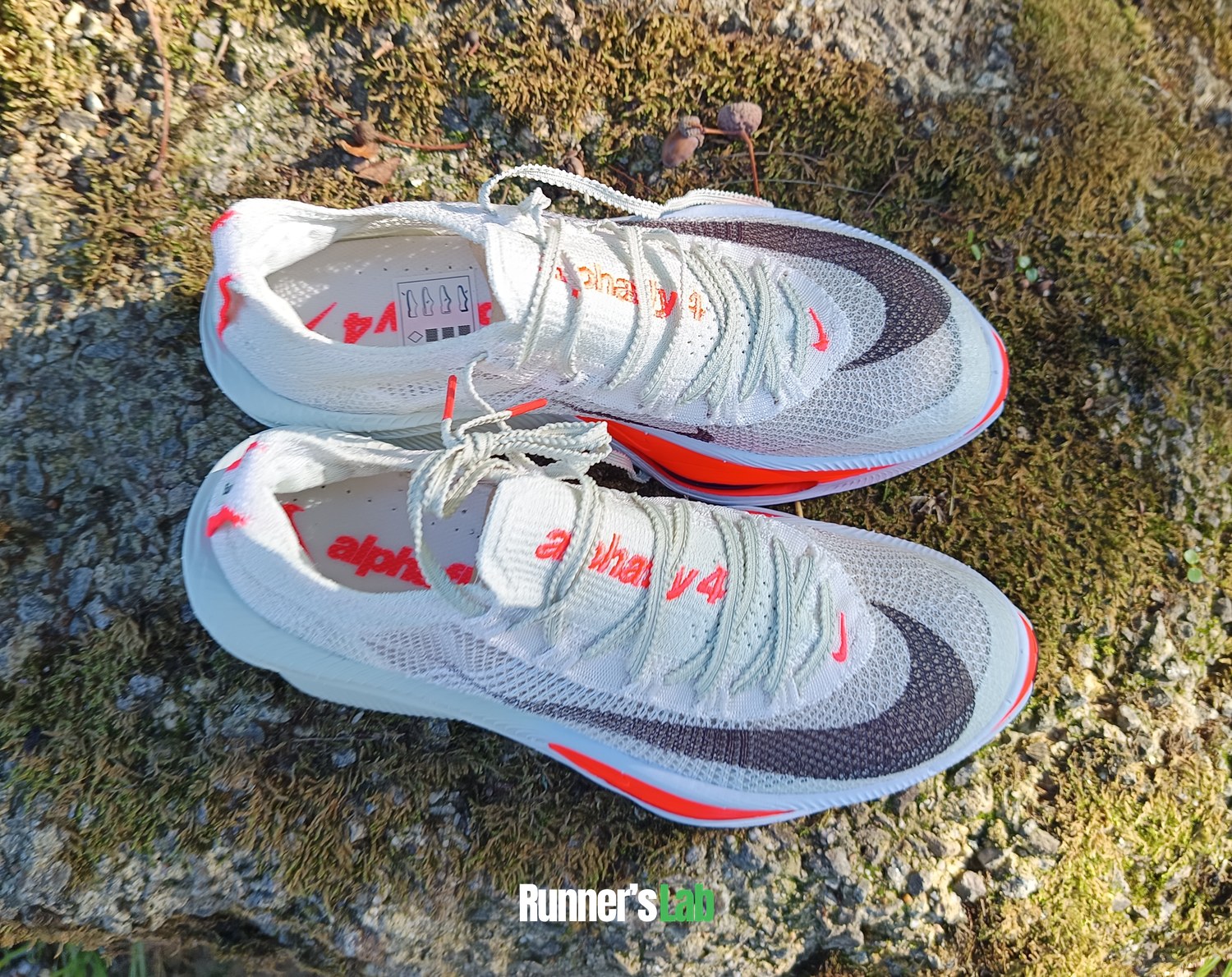
Fit: the upper is quite stretchy, and I never felt constricted despite my fairly wide feet. The shoe fits true to size, though some reviews recommend going up half a size. If you have very wide or high-volume feet, try it on before buying if you can.
Traction
A thin Fast Shot rubber outsole, focused on the forefoot, with very good grip even in the wet.
The outsole is fairly thin to save weight. The Fast Shot rubber is concentrated on the forefoot, with just two small reinforcements at the heel.
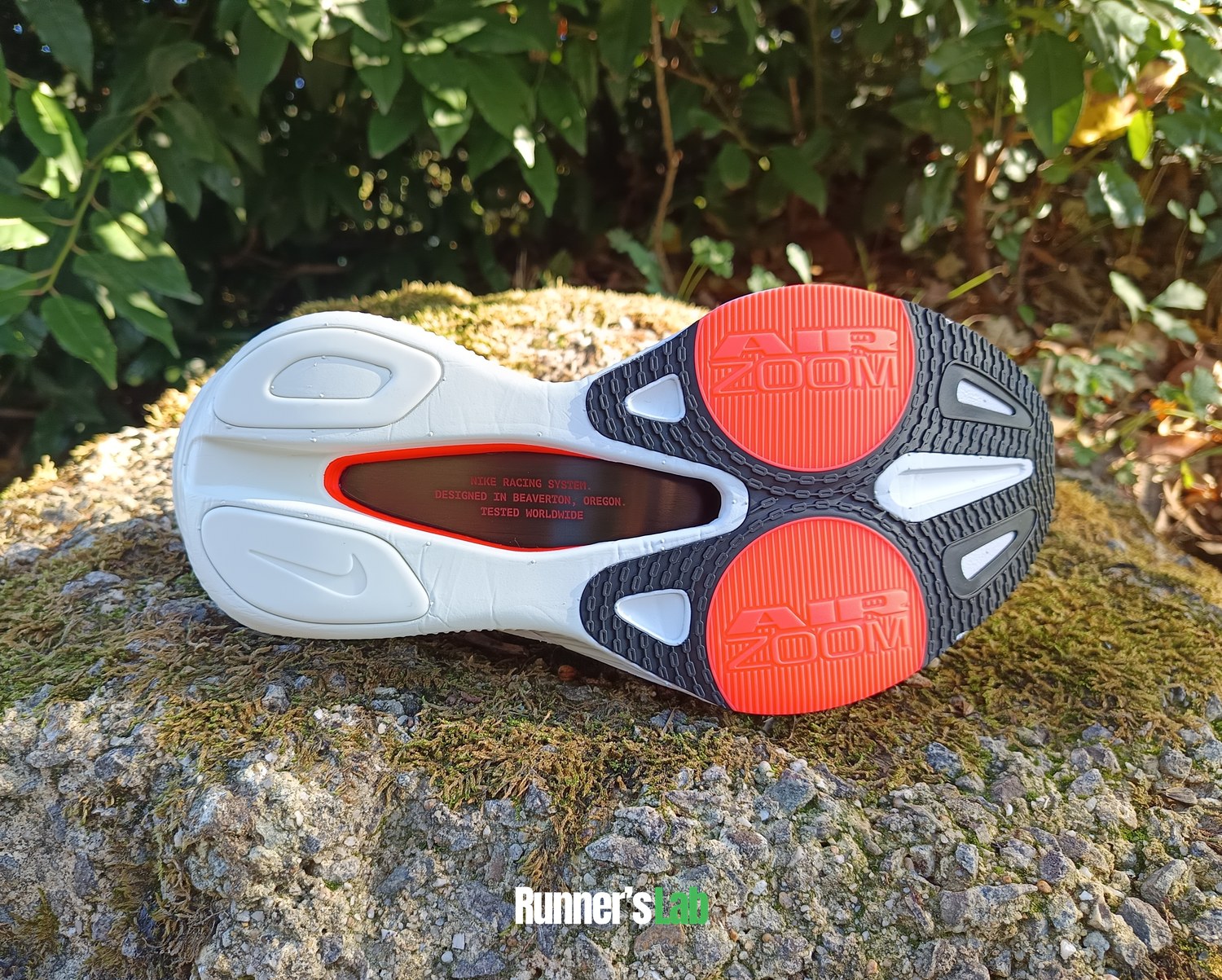
That thin forefoot layer gives excellent traction, and even on wet roads it is hard to fault: the grip is very good. It is less at ease on trails and paths, but that is not what it is built for: its place is the road or the track. The many grooves, including the deep central one, give it very good flexibility.
Durability
Keep an eye on the foam and the Air Zoom units: a shoe to save for race day.
The Atomknit upper is durable, but it is thin, so avoid obstacles where you can. No outsole issues have been reported so far. It is still worth watching: the outsole of my Alphafly 3 peeled away at the front after just 100 km. Nike seems to have worked on this, and the V4 sole looks more durable.
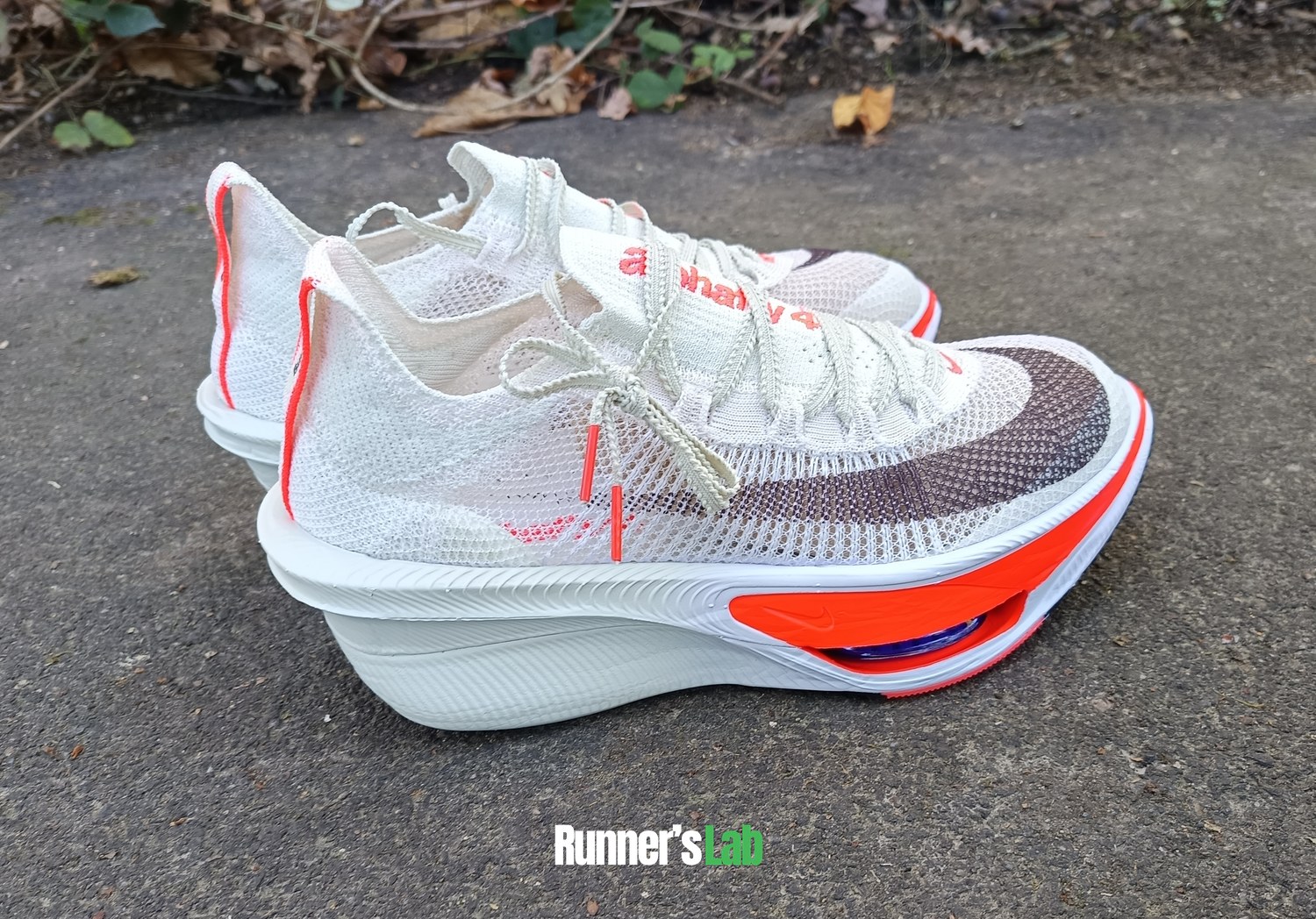
Problems come from the foam and the Air Zoom units. On the V3, an air bubble burst after 40 to 50 km, and I am not the only one who reported it. I have not had the same problem with the V4 so far, but it is worth watching. The foam also shows visible signs of wear quickly, so use the shoe sparingly ahead of race day.
Given its lifespan, it remains a significant investment. Nike highlights its Move To Zero initiative: the shoe contains recycled materials, but the brand does not disclose the proportions. According to our information, the Nike Alphafly 4 is not vegan.
Who It’s For
Racing from the 5K to the marathon, at its best over the half and full distance.
As with most carbon racers, its limits are the usual ones: it is less suited to pure speed workouts, and it remains demanding for beginners. Track runners doing very fast 400 m repeats may find it “soft” when they accelerate hard. For the vast majority of runners, though, the Alphafly 4 performs excellently in those sessions too, with virtually no difference from more specialized models. And given its short lifespan, using it for every session makes little sense anyway.
It is demanding and not suited to beginners: it will feel unstable, and the bounce is hard to control. But would a beginner really pick this kind of shoe? In my opinion, the Alphafly 4 is among the least demanding in its category, thanks to the mechanical feel of the Air Zoom units. Even heel strikers can benefit from its pronounced roll and forward propulsion.
From the 5K to the marathon, it performs well and will be a formidable tool for breaking your personal records. It is less explosive than some models over shorter distances. Nike recommends it for the half marathon and the marathon, and that makes perfect sense. From traditional long runs to tempo work, it is a pleasure to run in. At moderate paces it is less at home, though much less so than other models: it really comes alive when you pick up the pace.
Should you buy it?
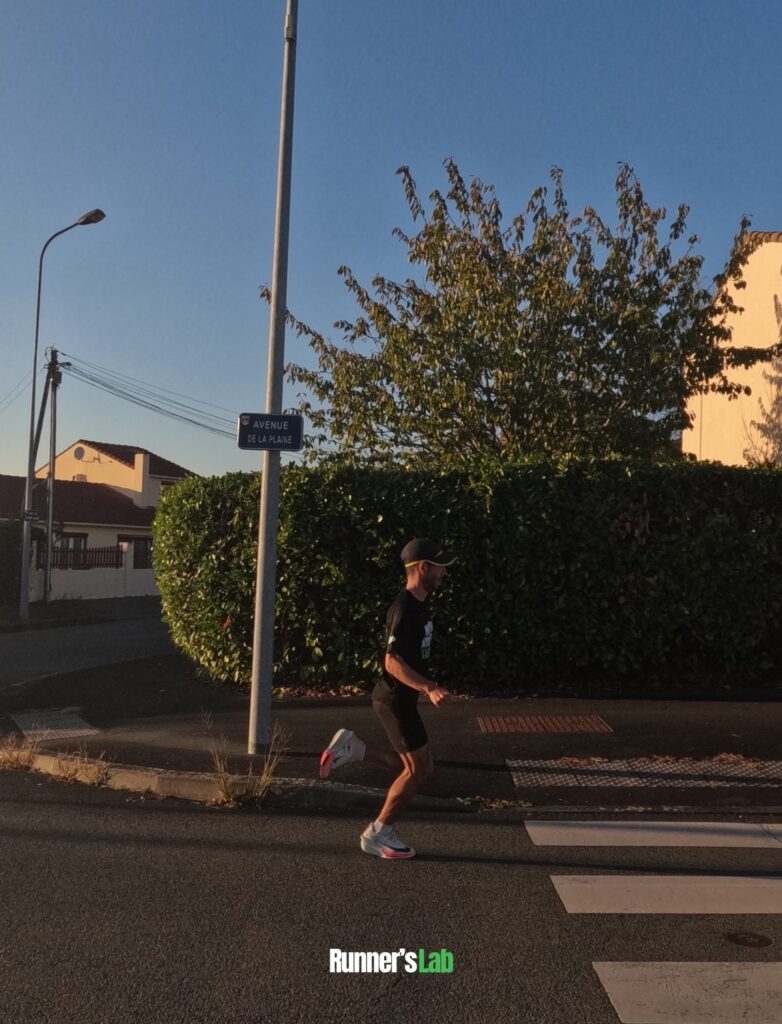
Yes, if you want one of the best marathon racers: Nike has finally released its flagship, and the Alphafly 4 sits on par with its main rival, the Adidas Adios Pro 5. Durability is the only downside, so use it sparingly and save it for race day.
Check price at REI