
Adidas Adios Pro 5 Review: The Most Explosive Carbon Shoe? (2026)

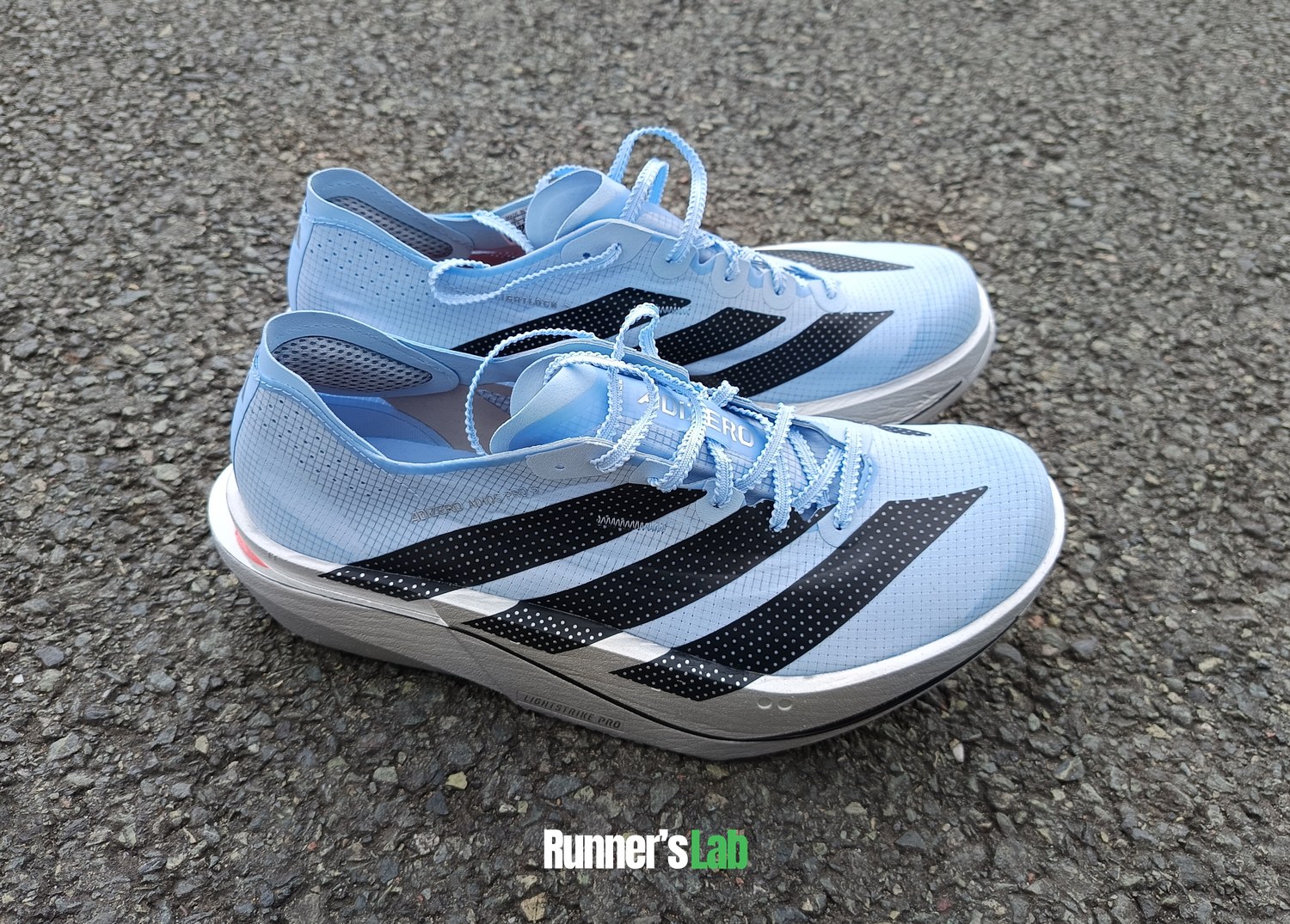
Unlike many competing brands that release new versions of their shoes every year, Adidas gives its carbon-plated racer a two-year product lifecycle. After Version 3 and then Version 4, we had to wait another two years for Version 5. Given its success, this is understandable, and the design teams had time to improve (once again) on their masterpiece.
With the rise of the Adizero Adios Pro Evo 3, worn by record-breaking athletes, the brand must now make adjustments to the Adios Pro line. This line remains its flagship model: the Evo 3 is far too expensive to be affordable for all runners.
This new version is therefore eagerly awaited by all runners looking to set personal bests. The changes are significant, and, as is often the case, some will like them more than others.
Where exactly does the Adidas Adizero Adios Pro 5 fit in? Is it a good fit for your profile and goals?
That's what we'll find out in this field test.
Why Should You Trust Me?
With a personal best of 2:38 in the marathon and a substantial weekly training volume, I test many different shoe models to support my running.
I put the Adidas Adios Pro 5 through its paces in various types of workouts, testing its comfort and performance. I also consulted other runners to validate my impressions and ensure that my recommendations will be useful to as many people as possible.
Our Verdict
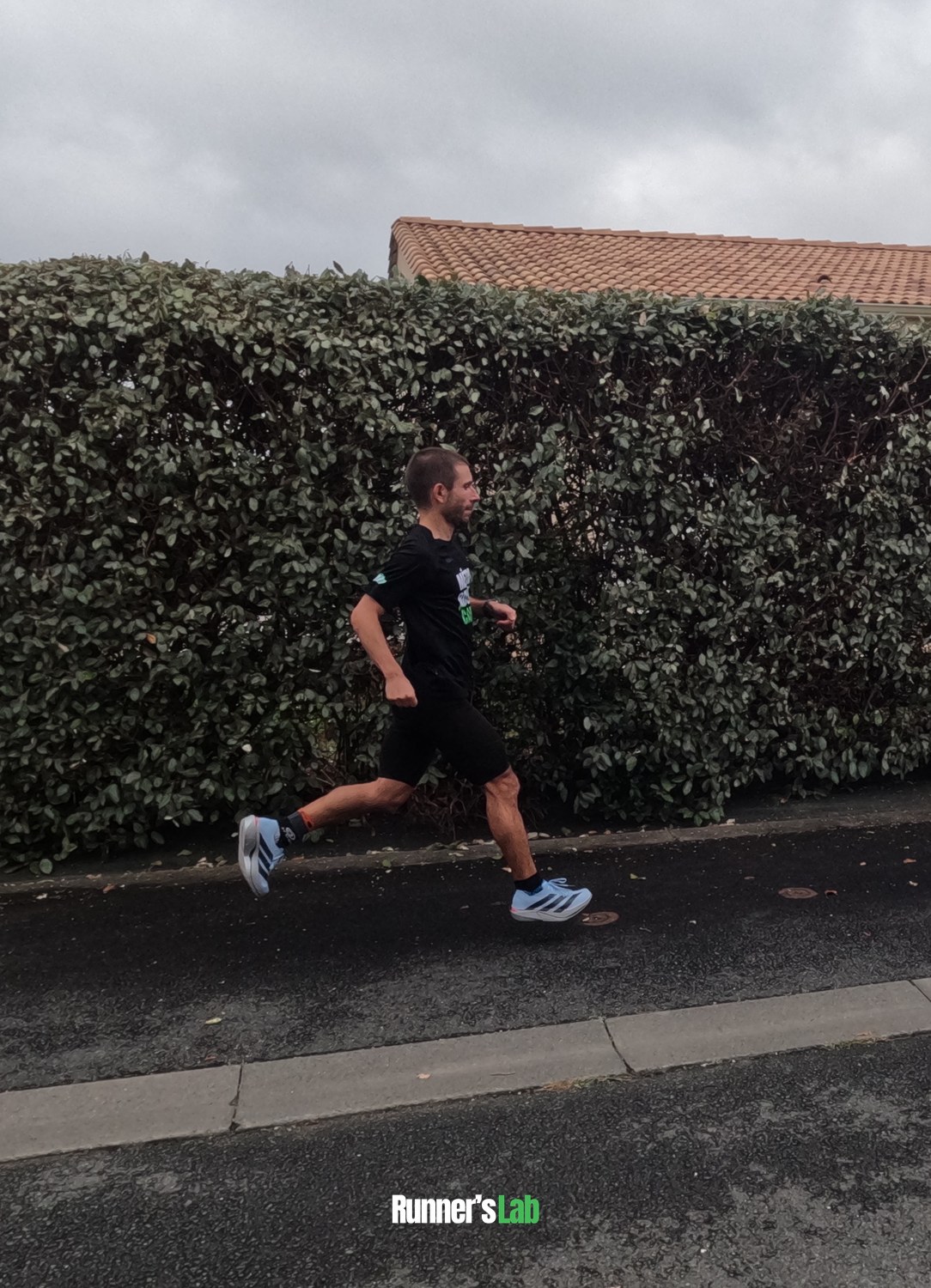
An excellent running shoe with a carbon plate, even more explosive than the previous version.
- Weight: 170 g / 6.0 oz in size 42
- EnergyRim carbon plate + Lightstrike Pro foam
- Stack height: 39 mm (heel), 35 mm (forefoot)
- Drop: 4 mm
- Racing at all distances
The excellent Lightstrike Pro foam is featured in the midsole. The major innovation comes from the new U-shaped EnergyRim carbon structure, which replaces the EnergyRods 2.0 carbon rods. According to the brand, it allows for more foam in the flex zone without sacrificing the stiffness that provides propulsion. Added to this is a new 4 mm heel-to-toe drop (down from 6 mm), which provides more foam in the forefoot. The weight is significantly reduced (by about 25 g / 0.9 oz).
Let's just say it straight out: I was blown away by this new version, like most of the runners whose reviews I've read. The feel at impact is plusher, making for a truly enjoyable ride. The bounce is just as strong as ever, and the ride feels more explosive. The level of performance is simply exceptional.
Stability is improved thanks to the new construction, and the new Lightlock 2.0 upper provides impressive lockdown and comfort for such a lightweight shoe.
The outsole combines Continental outsole rubber with Lighttraxion technology. Once again, the result is impressive, with grip that works on every surface. The only downside is durability, which some runners have pointed out.
In short, the Adidas Adizero Adios Pro 5 has established itself as the new benchmark to beat. It may be the most well-rounded carbon shoe to date.
Pros
- A plush feel upon impact for a very comfortable run
- Lighter and more explosive, versatile across all racing formats
- Shock absorption that lets you push yourself all the way to a marathon
- A very comfortable and breathable upper, designed for speed
- Reliable traction and improved stability
Cons
- The fit wasn't right for everyone (if in doubt, go up half a size)
- Durability has been called into question by some testers
Lightstrike Pro Cushioning and EnergyRim Construction for a Plush Feel
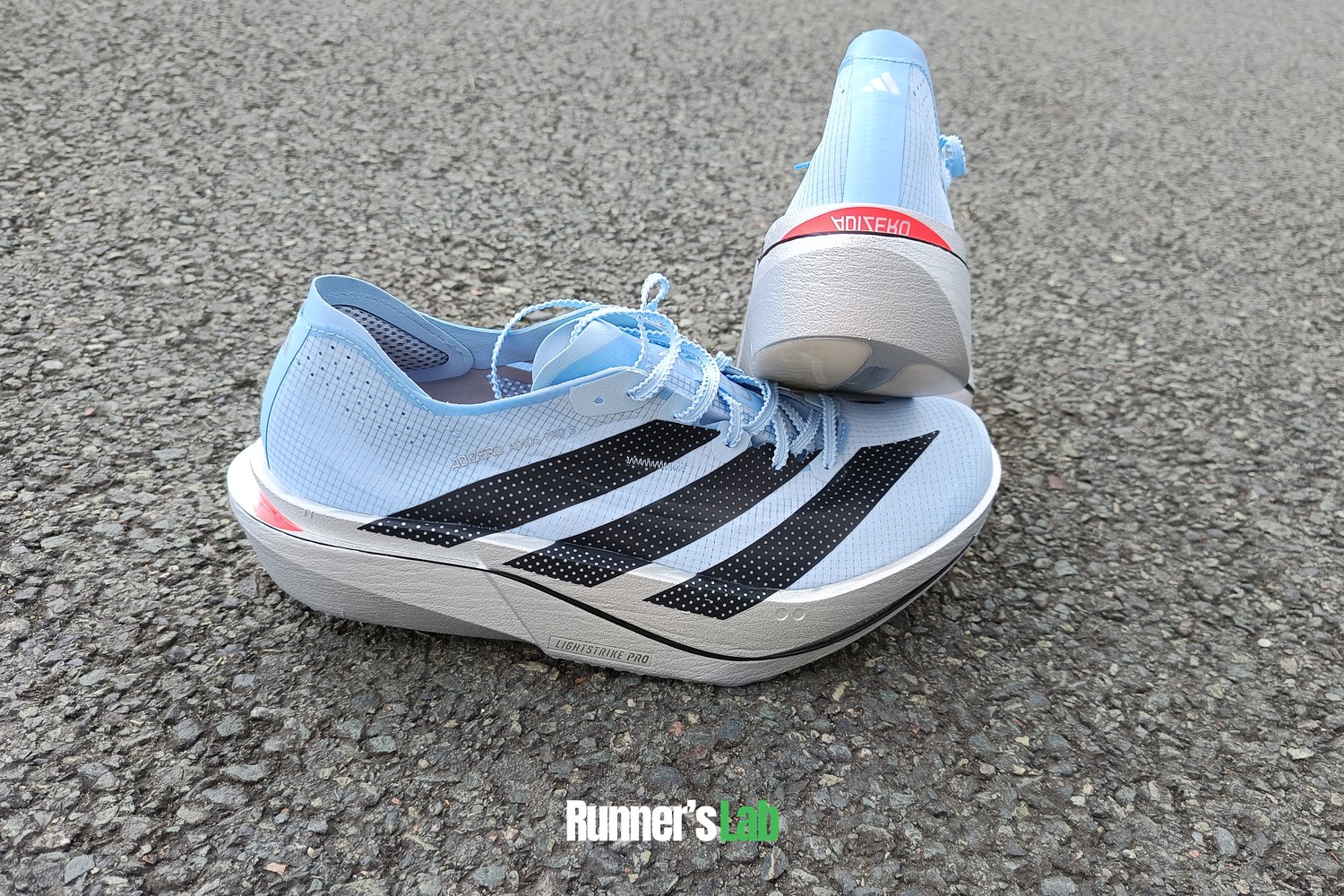
The midsole features a now-familiar design: a double layer of Lightstrike Pro foam surrounds the new EnergyRim carbon fiber structure. This replaces the EnergyRods 2.0 carbon rods.
This is the main innovation, and the change is fully evident upon impact. The idea is simple on paper: the new U-shape allows for more foam to maximize energy return, without sacrificing the stiffness typical of shoes with a carbon plate.
Does it work? I think I can say yes. There's no loss of stiffness compared to the V4: the shoe doesn't bend easily by hand, and you could almost say it's stiffer. You also get that characteristic click with every stride.
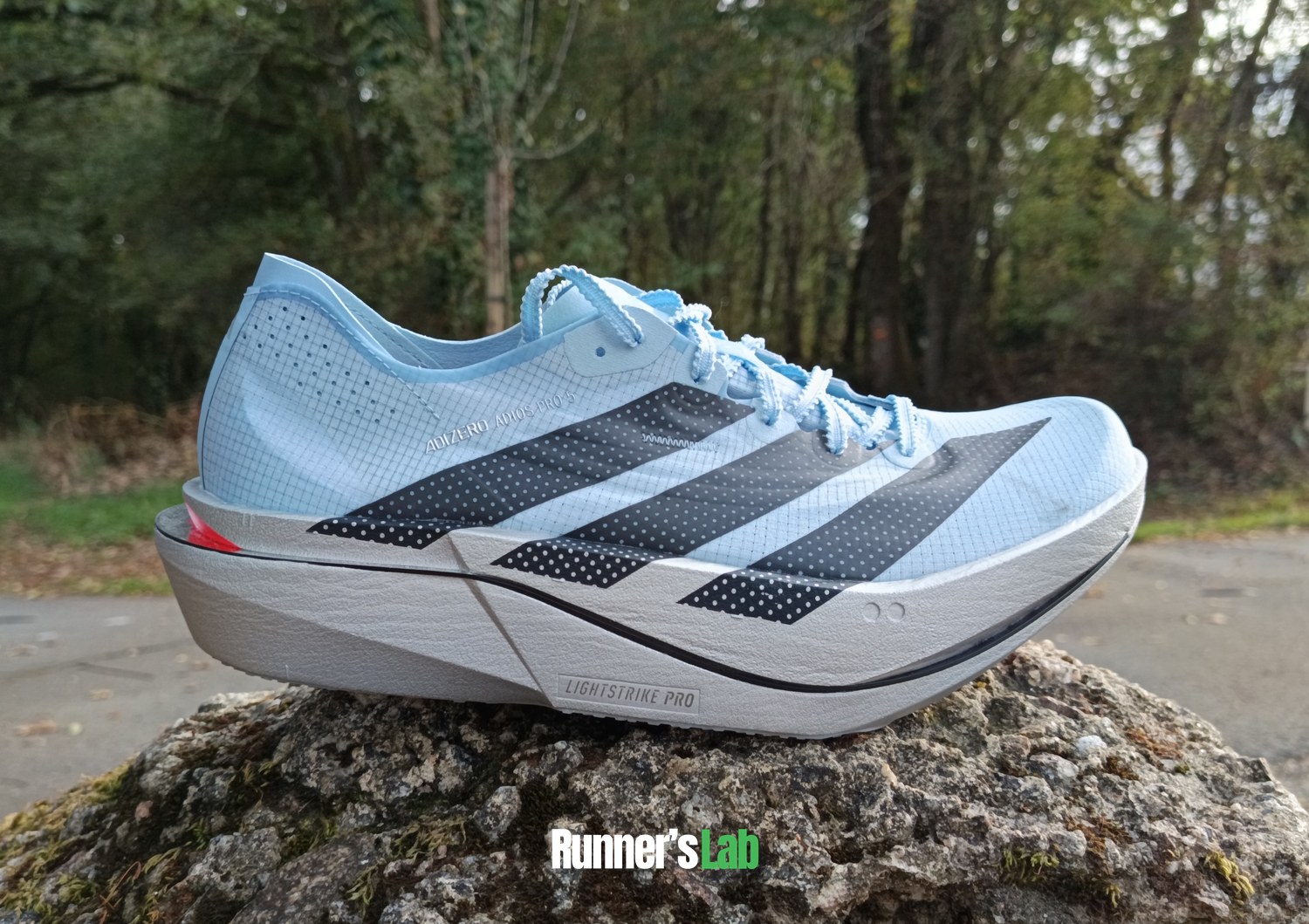
That said, the feel upon impact is (in my opinion) more plush than on the previous version. The ride is a real pleasure, which I always find impressive with this shoe. I should point out that this is just my opinion: I've read different reviews from other runners.
It certainly depends on your foot strike. The new design slopes downward and widens toward the midfoot. As a result, your foot has more direct contact with the foam, especially if you strike with the forefoot.
I also find that the structure provides better guidance for the foot. That's a plus toward the end of a marathon, when your stride becomes irregular and your foot can veer off course.
It is difficult to pinpoint the exact composition of the foams. Adidas keeps things somewhat vague, and the information varies from one website to another. I've read that it's a combination of Peba (top layer) and A-TPU (bottom layer), but also that TPEE is used in both layers. In all its press releases, the brand simply states that it is a new Lightstrike Pro formulation.
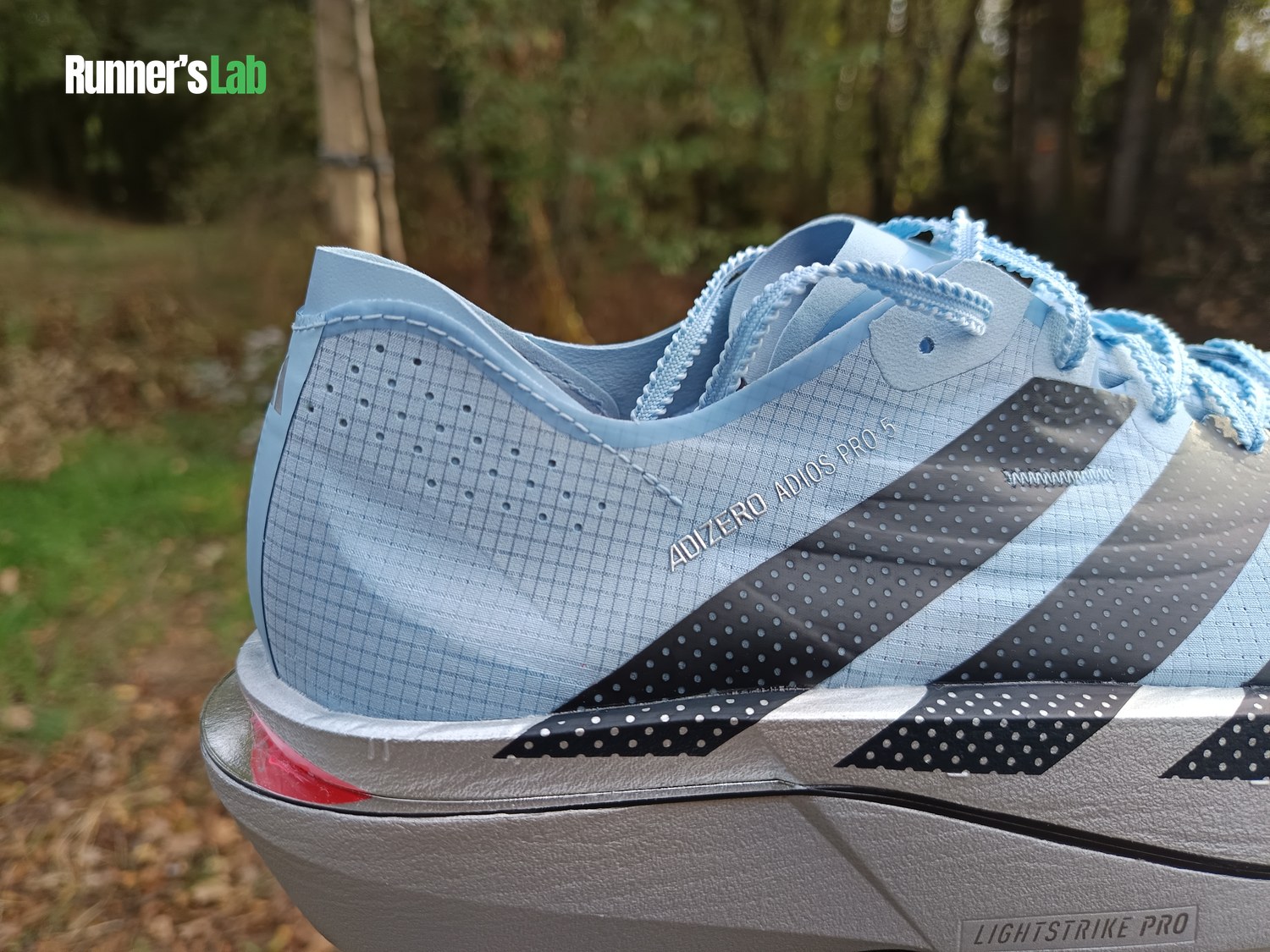
In any case, the ride feels very well balanced, neither too plush nor too firm. It should suit just about every runner.
The geometry is also new: the rocker starts about 1 cm further back, at the middle of the foot. The roll is even smoother and faster, and rolling forward is easier.
The dimensions are 39 mm under the heel and 35 mm at the forefoot (2 mm more than on the V4). Shock absorption is excellent, with no limitations on distance, even up to a marathon.
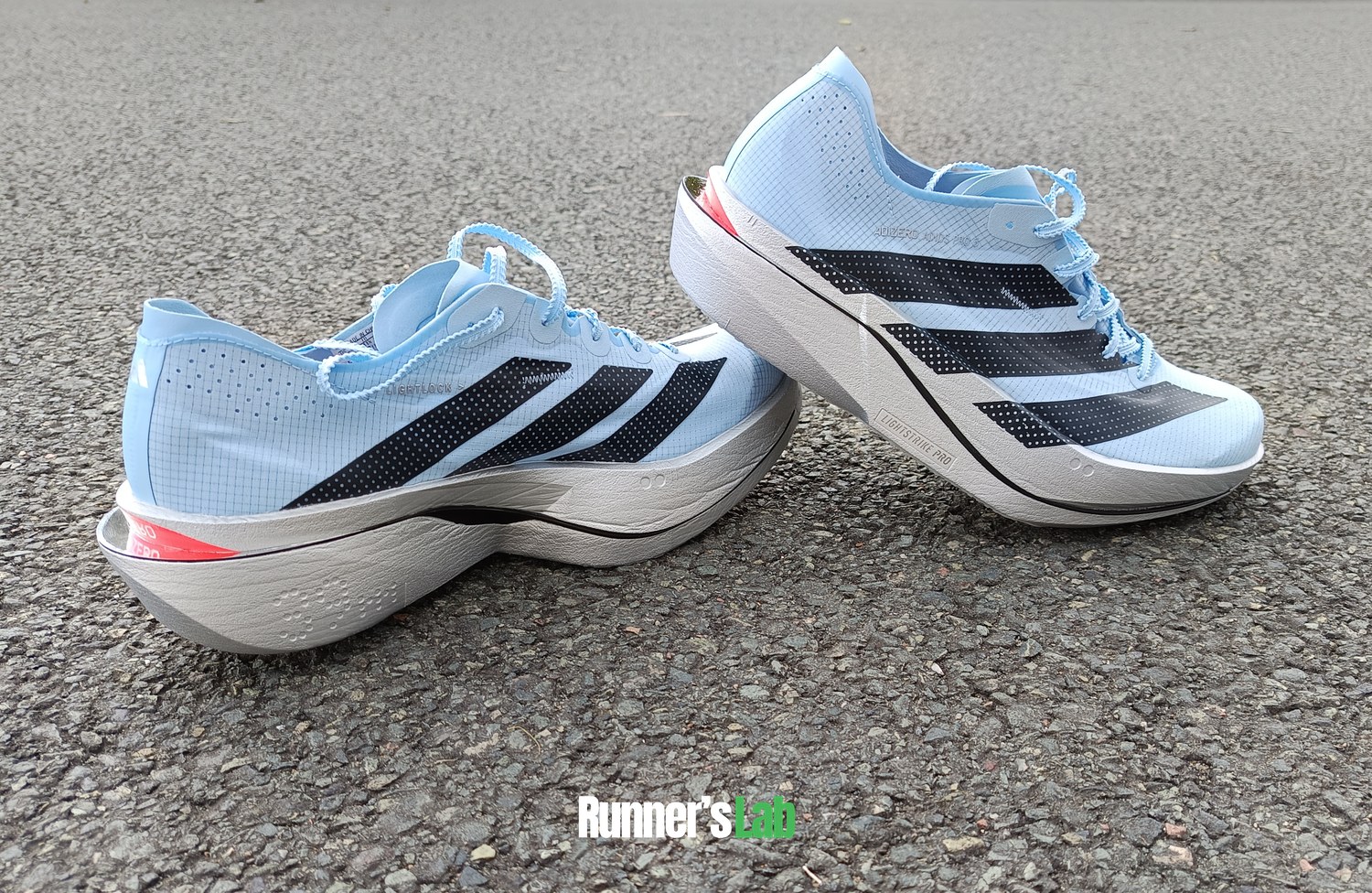
The drop has been reduced to 4 mm (down from 6 mm), which provides more protection at the front if you strike in that area, something I particularly appreciated.
On the other hand, the rocker is consequently less pronounced and flatter (but it makes up for this by starting earlier, as noted above). In my opinion, this makes the shoe more comfortable. But this also makes it more challenging: if you're used to standard heel-to-toe drops (8 to 10 mm), you may really need some time to adjust.
170 g / 6.0 oz and an Even More Responsive Ride Than the V4
The Adios Pro 5 is 25 g / 0.9 oz lighter, weighing in at 170 g / 6.0 oz in size 42. Its rocker does its job better, with smoother transitions, and it features a new foam formulation and the new EnergyRim structure. The result: it's even more responsive than the V4.
This is hard for me to write, and perhaps hard for my readers to accept (“he always says it's more responsive, better…”). But the market is changing at a breakneck pace, and what was true two years ago is no longer the case today.
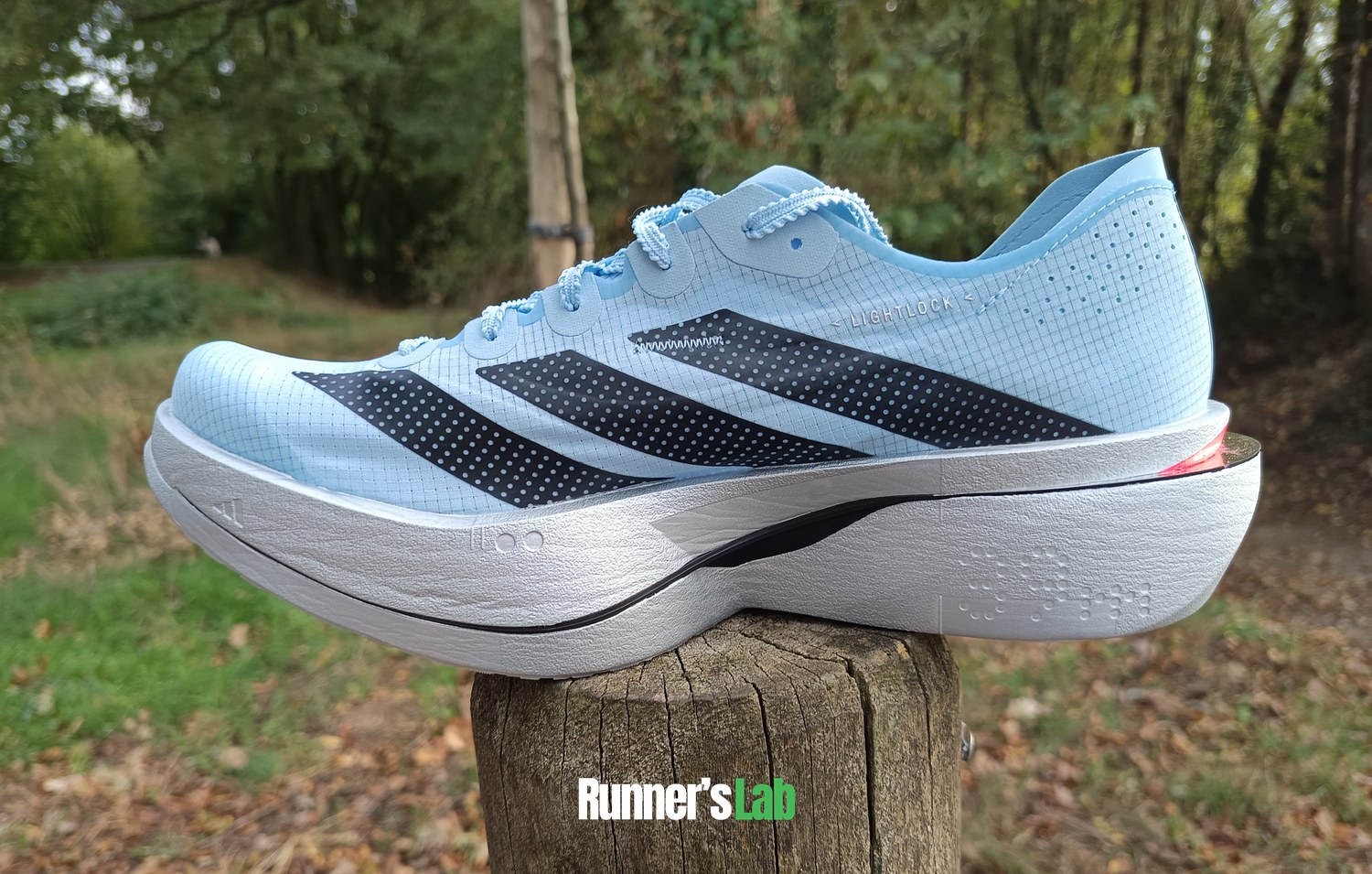
The bounce is still very much there, and the energy return is excellent (+9% according to the brand), with a pronounced forward roll and a well-engineered rocking motion.
This exceptional responsiveness makes the shoe one of the best for tackling all racing distances.
A Narrower Base, but Significantly Improved Stability
The base is about 5 mm narrower in the midfoot area. And, paradoxically, the shoe is much more stable (this is the unanimous opinion, it's not just mine).
The new EnergyRim structure certainly plays a role here, providing more pronounced foot guidance.
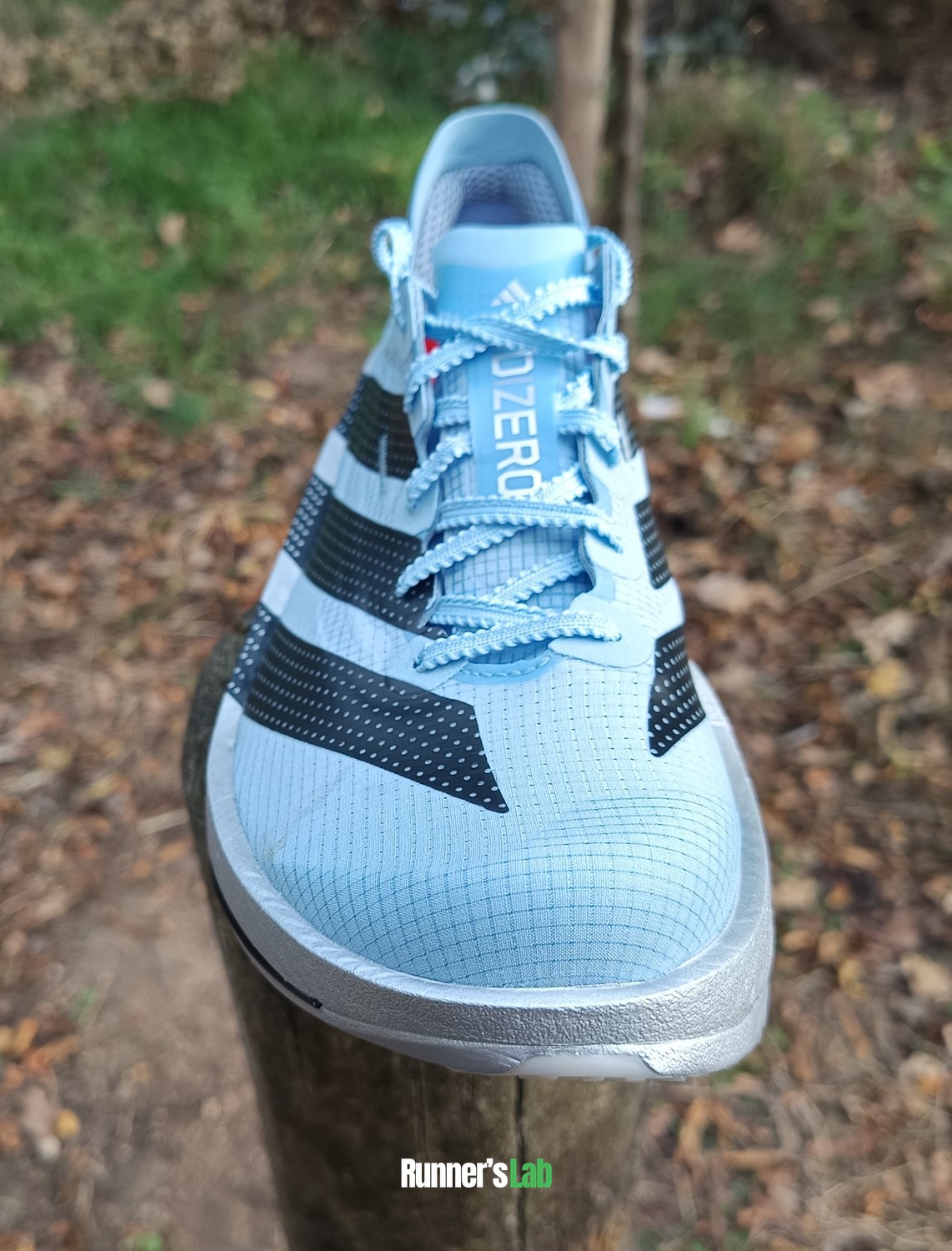
The shallower cutouts in the midsole also enhance stability. The snug-fitting upper and capable outsole contribute to this as well. It's rare enough to be worth noting: you'll find few, if any, reviews criticizing the shoe's stability.
That doesn't mean it isn't demanding, but it depends on other factors. The shoe is designed for neutral runners.
Excellent Foot Lockdown
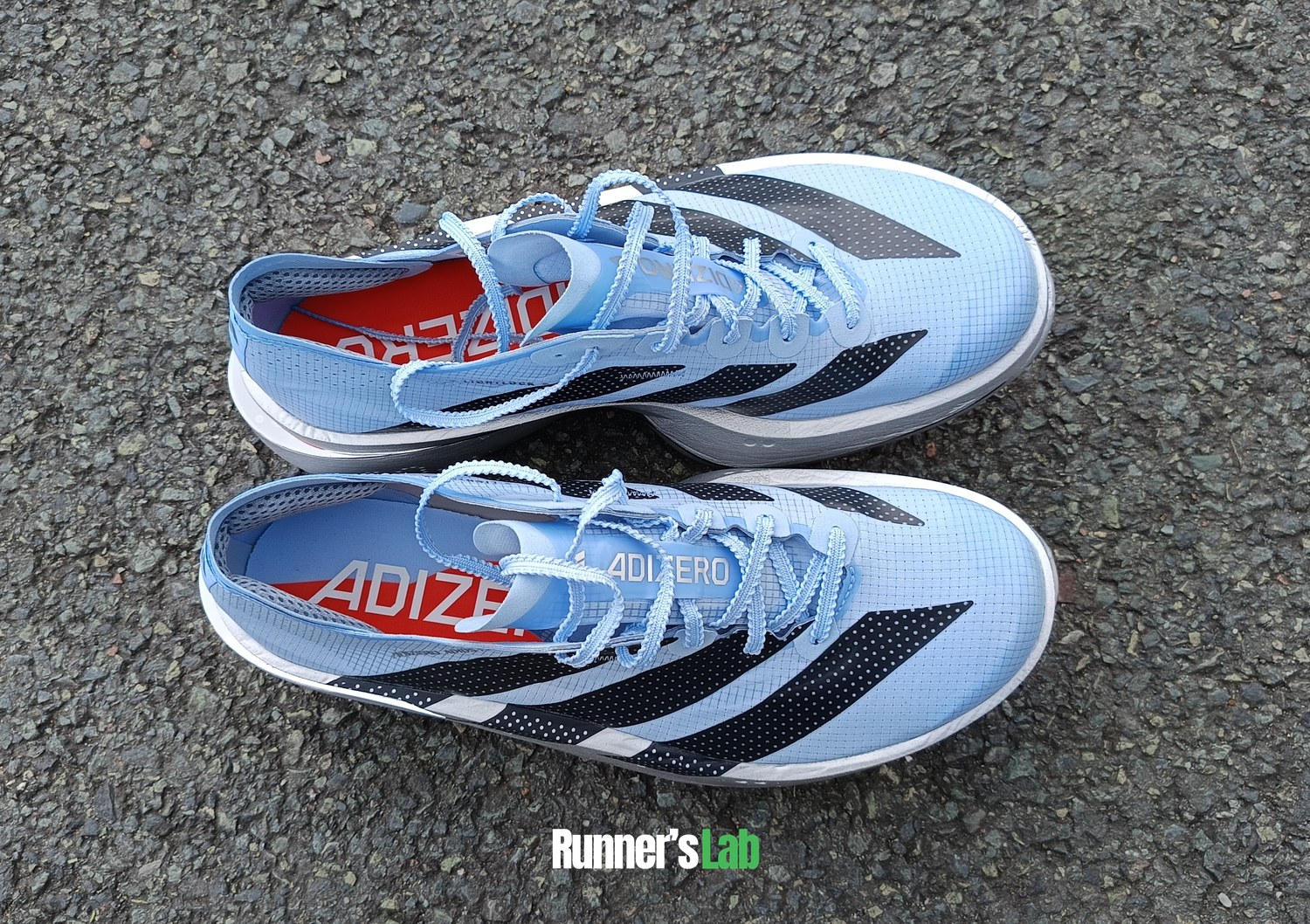
The new Adizero Lightlock 2.0 upper, made of ripstop nylon, has been redesigned once again. The V4's upper had already moved away from the plastic look of the V3. This shift is even more pronounced on the Adios Pro 5, which feels very pleasant to the touch.
The woven mesh is soft and lightweight. It stretches only vertically and holds the foot very well laterally. The three stripes aren't just for decoration, they add real lockdown.
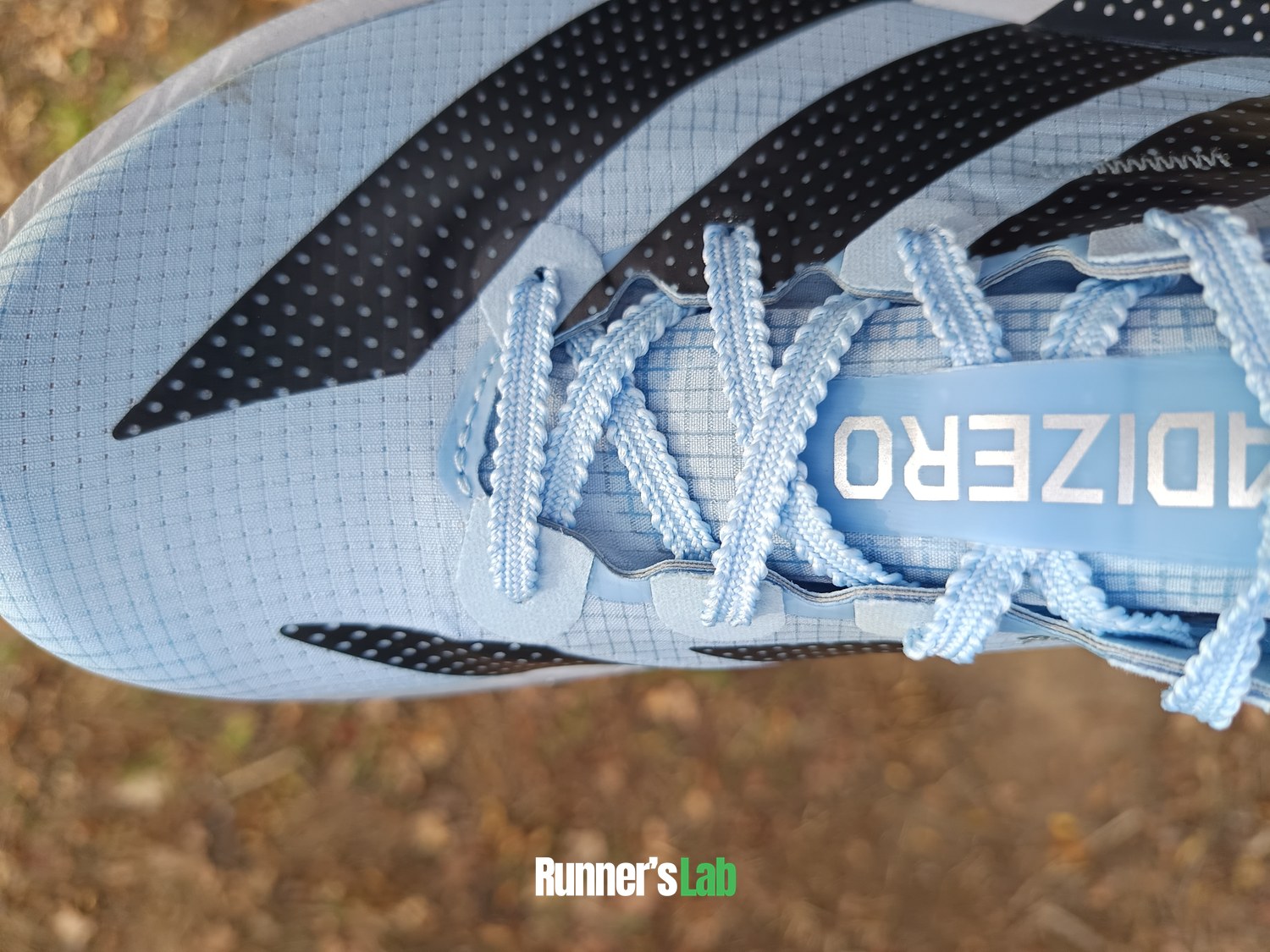
The overall structure isn't "loose": it holds the foot very well, with noticeable reinforcements in the midfoot. The Lightlock strap, positioned on the inside, wraps around from the heel on both sides up to the eyelets, providing excellent foot lockdown.
Next comes the fit, always a tricky topic to address in reviews, and the Pro 5 is no exception. Given its high sales volume, you'll find every opinion under the sun in the reviews. Without meaning to criticize, I even read a review that described the shoe as both wider and narrower in the same sentence…
So I'll do my part and try to shed some light on this issue. This is just my opinion: when in doubt, it's best to try on a pair before buying, if possible.
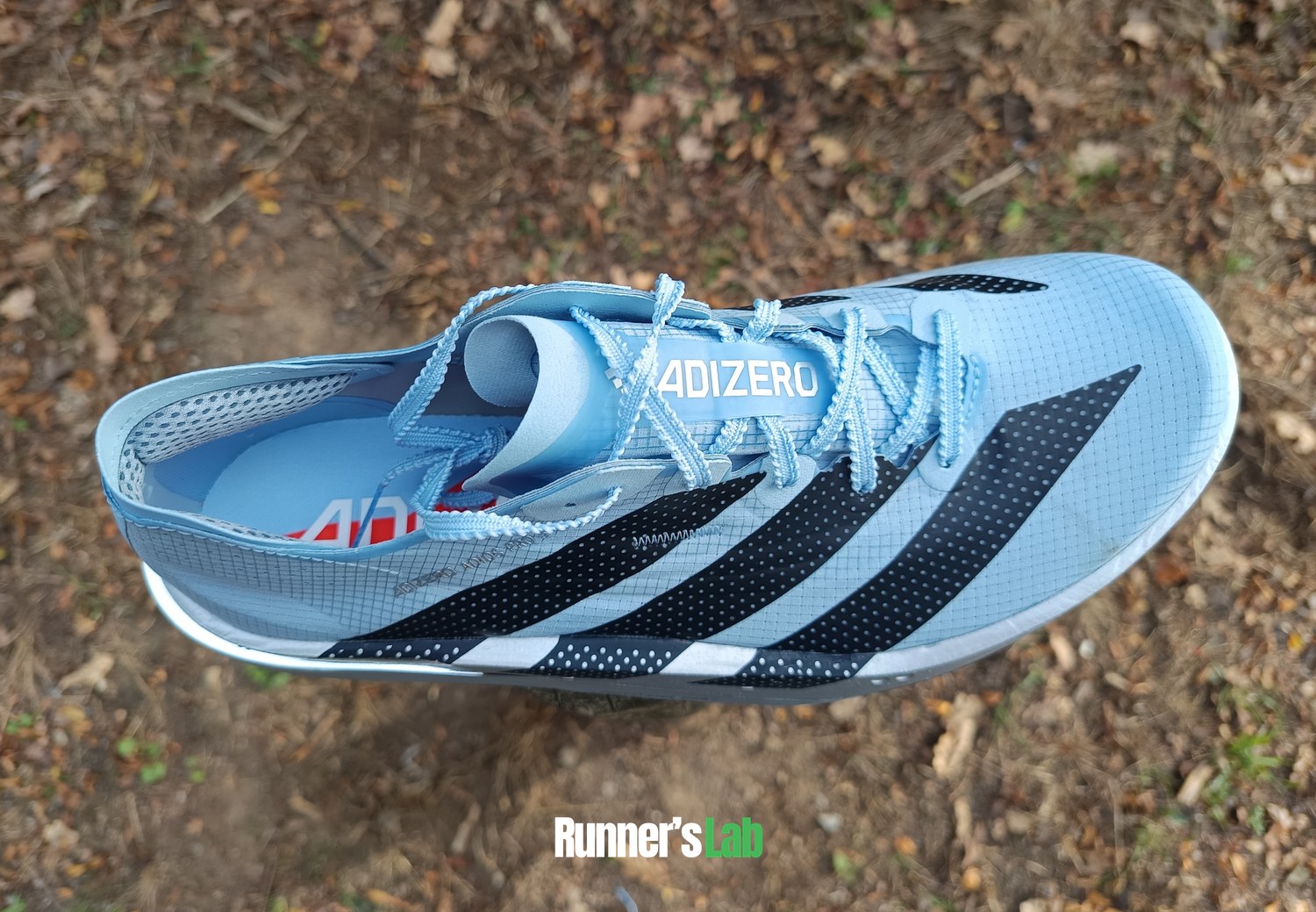
I found the shoe to be tighter in the forefoot than the previous version, even though, paradoxically, there's more room in the toe box. You can see it in the video where I'm putting it on: it's not easy to get my foot in.
For me, the length is the same. I was able to get my usual size from Adidas without any problems, especially since the mesh is flexible and fairly stretchy. A racing shoe should fit as snugly as possible: so I think it's spot-on in that regard.
As I was saying, if you're unsure and can't try it on, it might be best to go up half a size.
The upper is very thin and features numerous micro-perforations, providing good breathability. It offers less warmth in cold weather, but this isn't an issue during racing. Moisture wicks away effectively, and the fabric dries quickly.
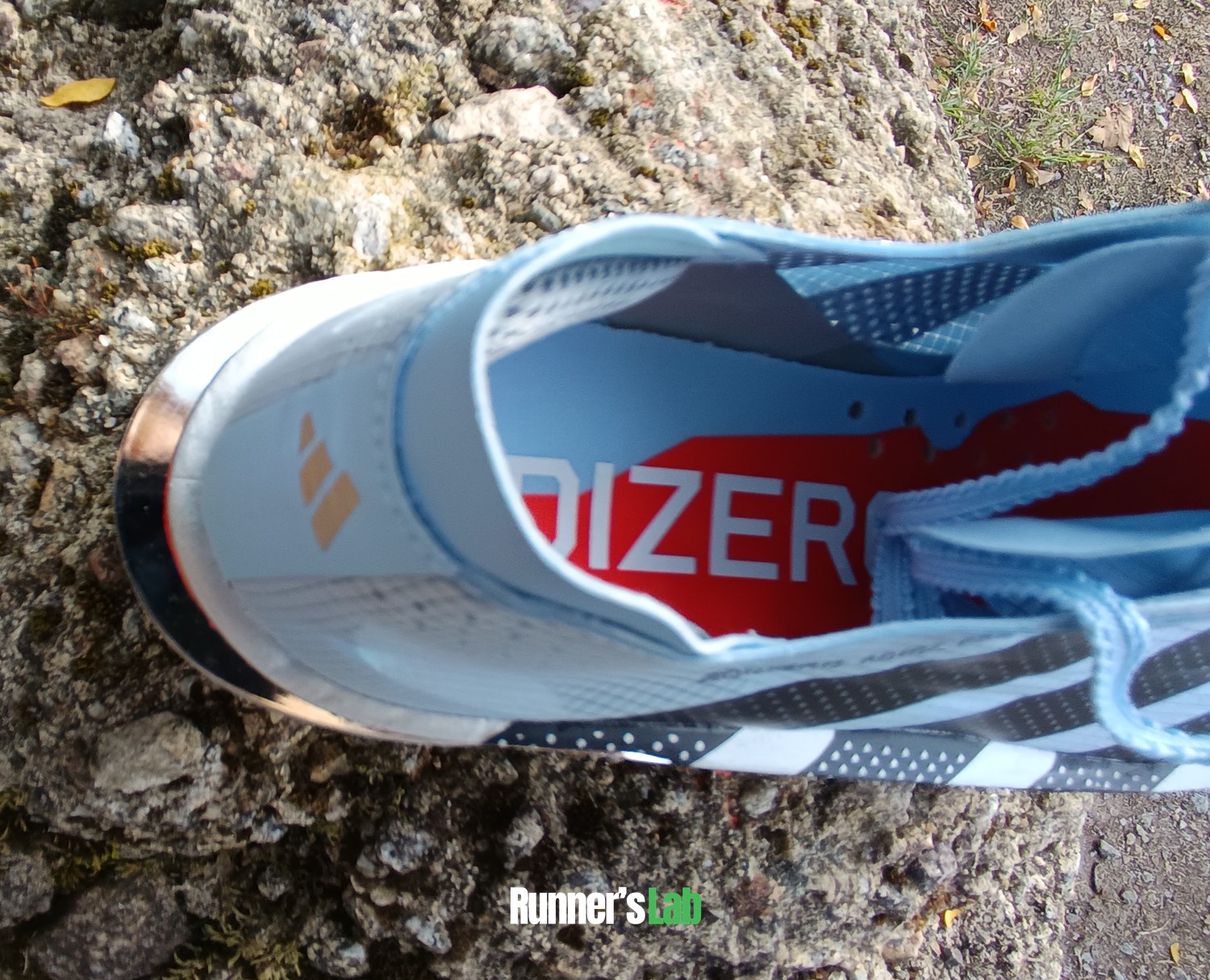
The gusseted neoprene tongue (with a foam pad) is secured along the inner layers. The new lacing system, featuring notched laces, works very well: no slippage has been reported. The widened area at the front prevents chafing, and no cases of black toenails have been reported.
The heel counter is stiff enough to keep the heel securely in place, with plenty of padding. It's also the perfect height: not too low, for a good heel hold, and not too high, to prevent irritation.
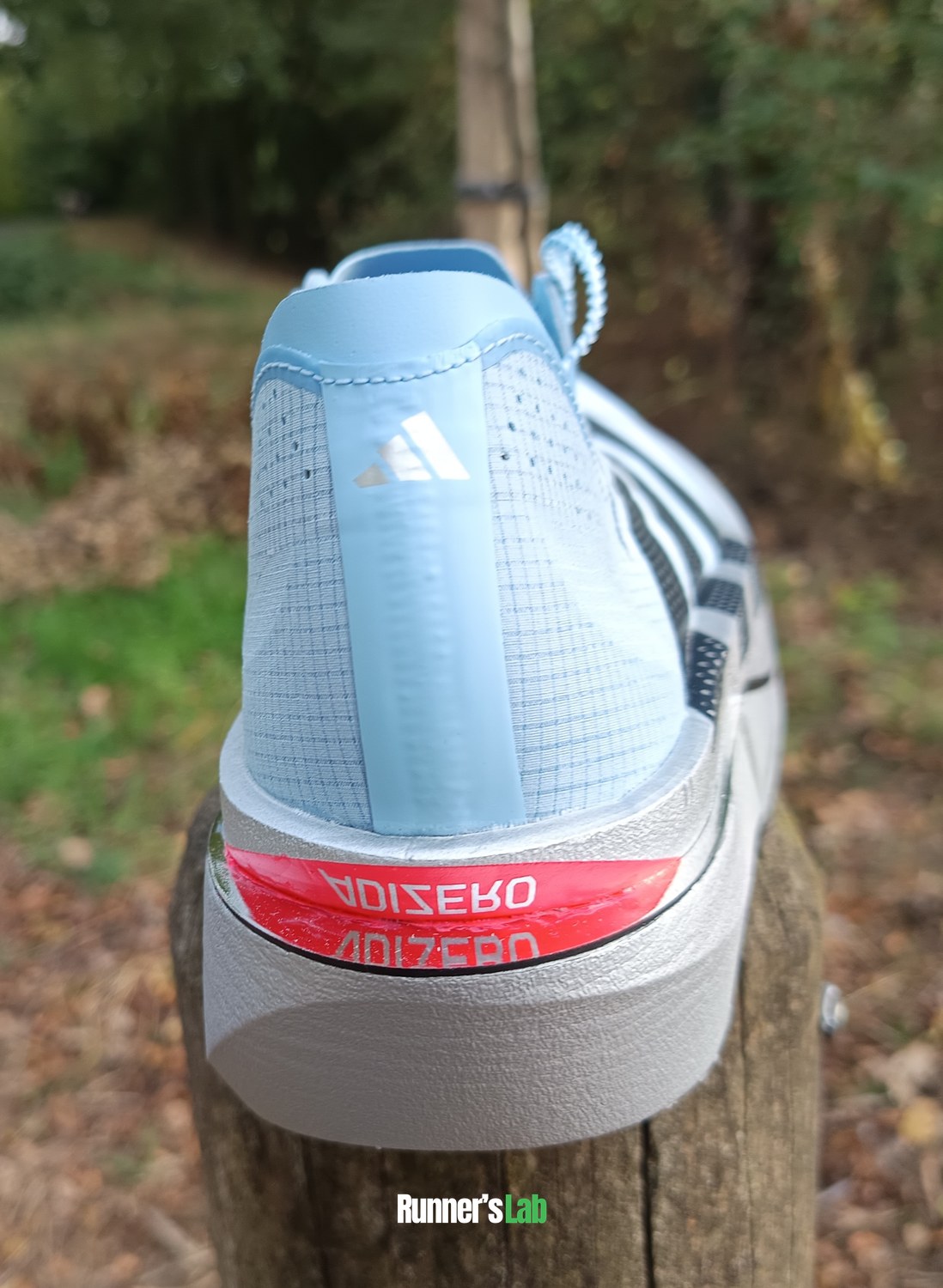
Then there's the comfort, which is truly impressive for such a lightweight shoe. Of course, you shouldn't expect the same level of comfort as you would from specialized models, but wearing the shoe for long periods of time is no problem at all.
The Adizero logo on the back completes a look that should win over even those most skeptical of the carbon shoe aesthetic.
Reliable Grip Even on Wet Surfaces
After numerous changes between versions 3 and 4, the updates are less significant on this Adios Pro 5. The outsole still combines Continental and Lighttraxion technologies.
There isn't much Continental outsole rubber: it's just a reinforcement on the forefoot, which is most noticeable during the push-off phase. The main change comes from the Lighttraxion outsole, which extends seamlessly from the heel to the forefoot.
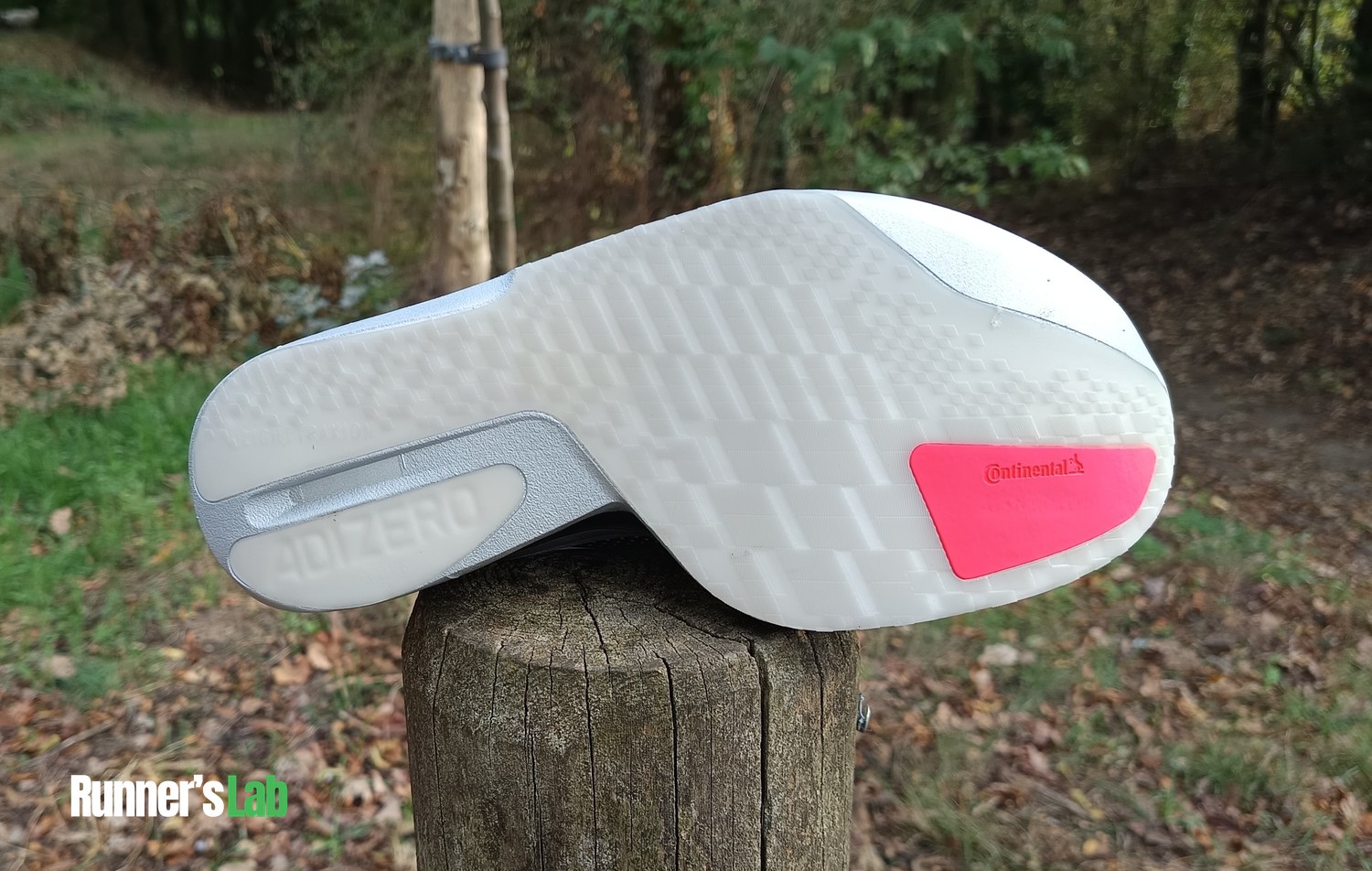
That's quite remarkable, considering that the shoe is now 25 g / 0.9 oz lighter. The first direct result: the indentation that used to reveal the carbon rods is gone. This is a real plus, since debris no longer gets stuck there.
That hardly ever happened, since the shoe is mainly used on roads. But if your run includes a few sections on trails with small pebbles, that won't be a problem anymore.
The traction works very well, with solid grip. Even on wet surfaces, the grip is very good, including on slippery white lines.
It obviously doesn't perform as well on dirt roads or trails, but that's not its primary purpose: it's designed for asphalt or the track. The numerous grooves ensure excellent flexibility.
Who Is It For, and for Which Workouts?
As with its competitors, the Adios Pro 5 is best for racing, of course. Especially since its durability, which may not be quite as good as that of the V4, really makes it ideal for race day.
Let me clarify this point: I haven't noticed any signs of premature wear, and I think it really depends on your stride. In any case, the shoe wasn't designed for training, but rather to help you break your personal records.
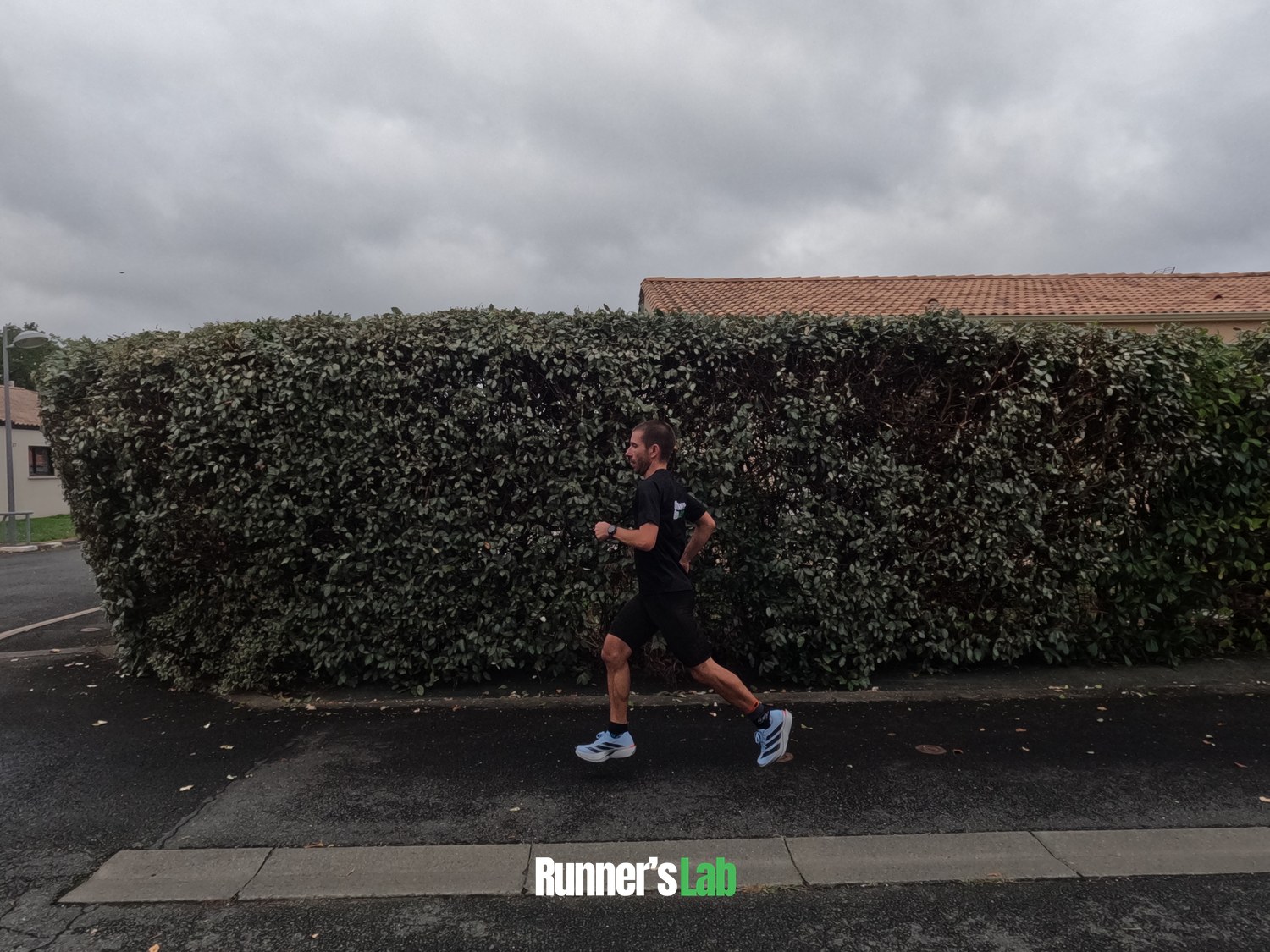
It's hard to limit it to long-distance racing. From 5K to the marathon, this shoe delivers top performance and will be a formidable ally in breaking records.
Still, it will be used more often for half marathons and marathons, which are the brand's main focus. The shock absorption is excellent, and there's no limit to the distance you can run.
That leaves the usual question for these models: at what speed can you really take full advantage of them? The latest studies (including the ones we've shared) show that every runner can benefit from them. The limitation lies more in how demanding these shoes are.
The Pro 5 is clearly not the most elite-focused of the carbon-plated racers, but it is still aimed at experienced runners. It has a pronounced forward roll, and the rocking motion will be difficult for a beginner to handle.
If you land on your heel, you probably won't get the full benefit of the propulsion, although that remains to be proven. I think the Pro 5 can still be a good fit for many runners of all levels. Its improved stability and excellent lockdown support this view.
As for limitations, there are pure speed workouts, such as 400 m repeats. In theory, the plush feel does not favor this type of acceleration.
In practice, this shoe will be a great fit for the vast majority of runners: only fast track runners will really notice a difference. Easy runs at a moderate pace aren't its strong suit either: it really comes alive when you pick up the pace.
The Adidas Adios Pro 5 is undoubtedly one of the best racing shoes available today, and probably even the best.
Is the Adios Pro 5 Fragile?
The foam is quite durable and retains its properties well over time. The upper shows no signs of premature wear, but it is quite thin: watch out for potential obstacles such as branches.
But the outsole has been the subject of a lot of criticism in some of the reviews and opinions I've read. In my opinion, there are three things to keep in mind:
- The outsole rubber is indeed thinner than on the V4.
- You'll find just as many, if not more, reviews that describe the outsole as durable.
- Some runners report that the foam can crumble in areas where it is exposed.
In my opinion, this is because every stride is different: foot placement, foot strike, impact force, and so on. This is true for all shoes, by the way.
On a shoe this light and thin, these differences account for the variations. In any case, all carbon racing shoes are designed for race day, and none retain their “magical” properties beyond 300 to 400 km (at most).
Durability may therefore be something to keep an eye on if you tend to wear out your outsoles quickly. The price is high, but no higher than that of competing brands: we'll let you decide for yourself whether the price offers good value for money.
The upper is made from at least 50% recycled materials. According to our information, the Adidas Adios Pro 5 is not vegan.
Adidas Adios Pro 5 vs. 4: What Are the Differences?
Compared to the Adidas Adizero Adios Pro 4, the changes are as follows:
- A new upper, closer to the foot
- A new foam configuration, with more foam in the front, thanks in particular to the U-shaped structure
- A new EnergyRim carbon-fiber structure
- About 20 to 30 g (0.7 to 1.1 oz) less on the scale
- A new geometry, with a rocker that starts earlier
- A new drop of 4 mm (compared to 6 mm)
The Adidas Adios Pro 5 outperforms the previous version, no small feat, given how well that one performed. The only downside is durability, which may be an issue for some. We still recommend this new version, but be sure to reserve it for racing.
Should I Buy the Adidas Adios Pro 5?
After making a huge splash with the Adios Pro Evo 3 and its sub-2-hour marathon record, Adidas is finally releasing its version for the general public. The Adios Pro 5 is quite simply the best racing shoe available today.
It manages to be fairly forgiving (though still demanding) and versatile across all distances. Its ride is explosive, with a pronounced forward roll. It would be perfect if some people weren't pointing out its lack of durability.
A gem to save for race day, when you're going for a new PB!
Technical Description
Technical Specs
| Terrain | Road |
| Pronation type | Neutral |
| Drop | 4 mm |
| Heel height | 39 mm |
| Forefoot height | 35 mm |
| Weight (men) | 170 g/6 oz |
| Weight (women) | 159 g/5.6 oz |
| Features | Carbon-fiber plate, Recycled materials, Rocker |
| Athletes | |
| Release year | 2026 |
| Price | Check Prices |
Cushioning
| Softness | Soft |
| Responsiveness | High |
Technologies
| Outsole | Lighttraxion + Continental |
| Midsole | Lightstrike Pro |
| Upper | Lightlock 2.0 (ripstop nylon) |
Use
| Speed | Moderate, Fast |
| Distance | Short, 5K, Mid, 10K, Half marathon, Long, Marathon |
| Workout | Racing |
Reference: official Adidas website
Need a hand?
Every month, thousands of runners trust us to find their perfect running shoes!
Check out our 2026 guide to the best running shoes.