


These two carbon-plated racing shoes both carry a thick, maximalist midsole, with a weight difference of more than 40 g / 1.4 oz in favor of the Adios Pro 5, much lighter than the Endorphin Pro. The Adidas also has a lower drop, with more foam under the forefoot.
The main difference is in the carbon design. The Endorphin Pro 5 goes with a full-length carbon plate, now split, for a slightly more aggressive ride. The Adios Pro 5 adopts the new U-shaped EnergyRim structure, embedded in its Lightstrike Pro foam, which replaces the EnergyRods and leaves more foam in the flex zone.
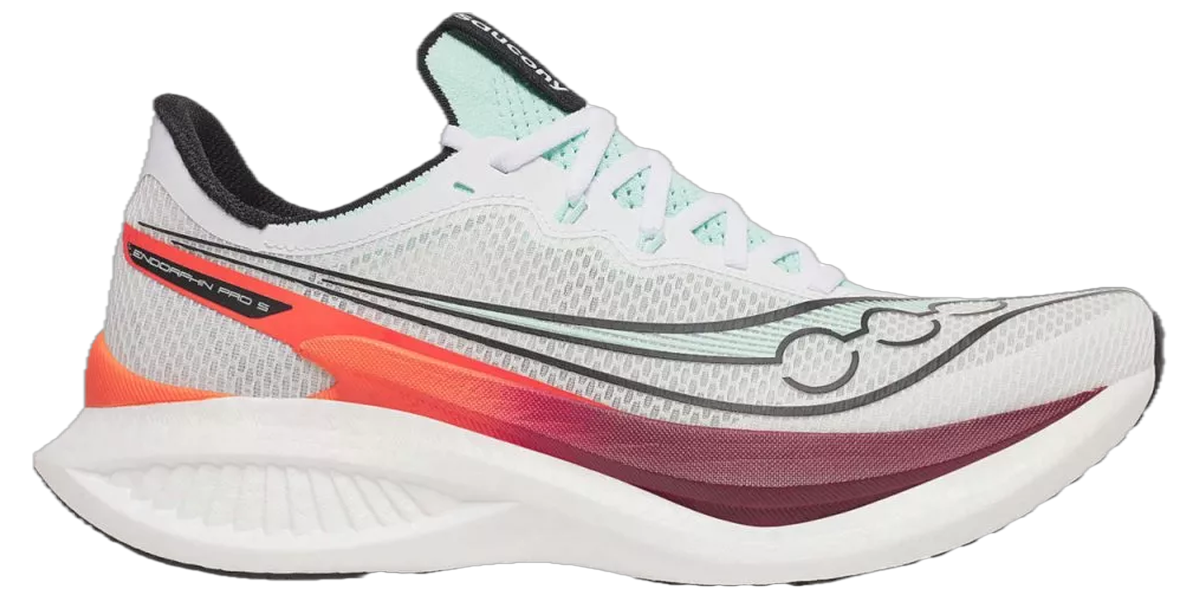
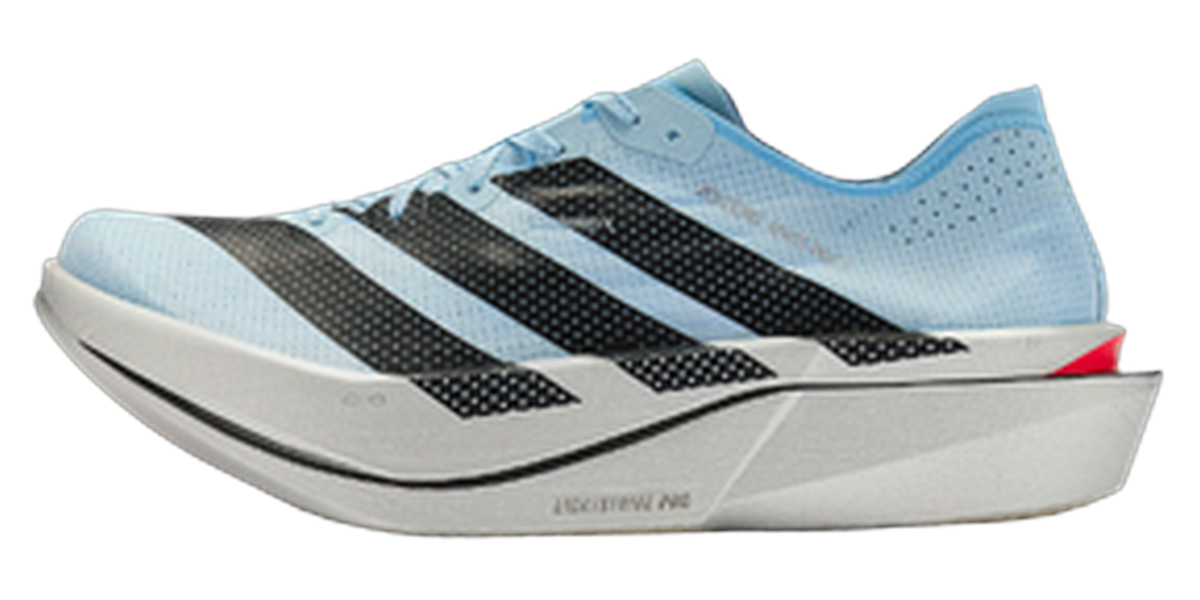
On the run, the cushioning is more explosive on the Adios Pro but more versatile and forgiving on the Endorphin Pro 5. So the Adios Pro is built to break your records, while the Saucony is more forgiving and can also serve as a premium training shoe. The Adios Pro 5 is also plusher than the Endorphin Pro 5, whose cushioning is firmer: if you prefer a soft feel underfoot, especially over long distances, the Adios Pro is the better choice.

On stability, both shoes are stable: the Endorphin Pro keeps a wide base, and the Adios Pro 5 has improved a lot on that front compared to the previous version, partly thanks to its new carbon structure.
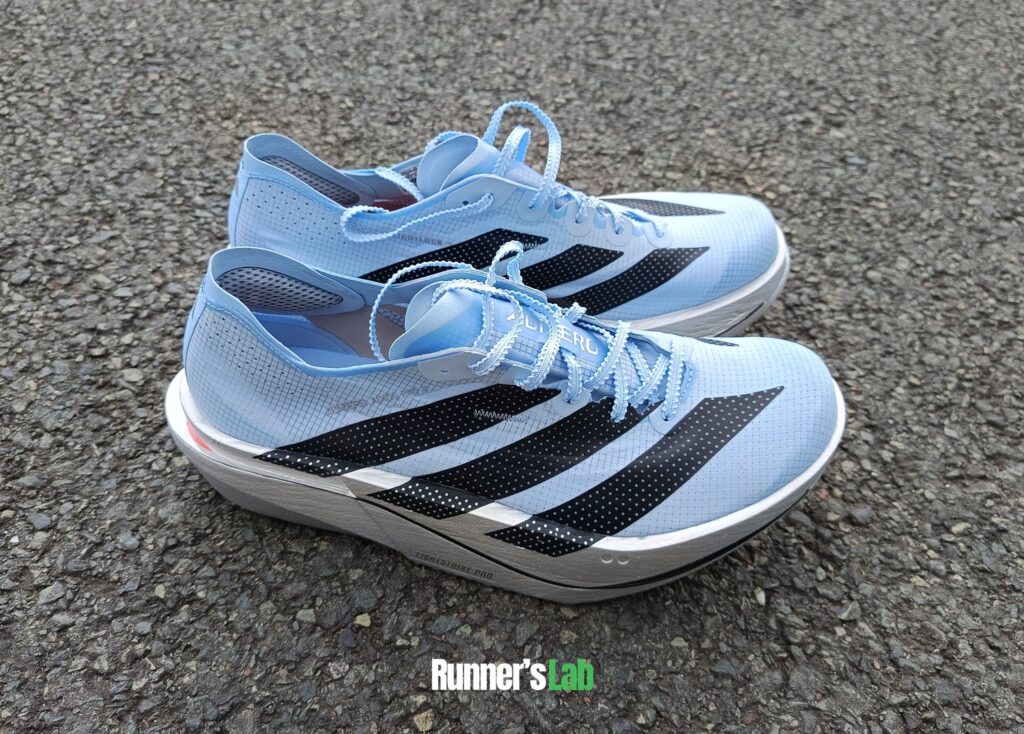
The latest versions of both shoes offer good foot lockdown, even if, as always, some runners report small issues here and there. That is notably the case for the Adios Pro, whose forefoot is tighter on this version: if in doubt, plan on going up half a size.
Endorphin Pro vs Adios Pro: Which Should You Choose?
Based on our team’s testing, these two shoes are evenly matched on most criteria. The Endorphin Pro 5’s cushioning has gotten plusher compared to previous versions and remains perfectly suited to long distances like the marathon.
So it mostly comes down to personal preference.
If you are torn, the Saucony Endorphin Pro 5’s better durability could tip the scales in its favor: some runners have called out the Adios Pro 5’s outsole.