

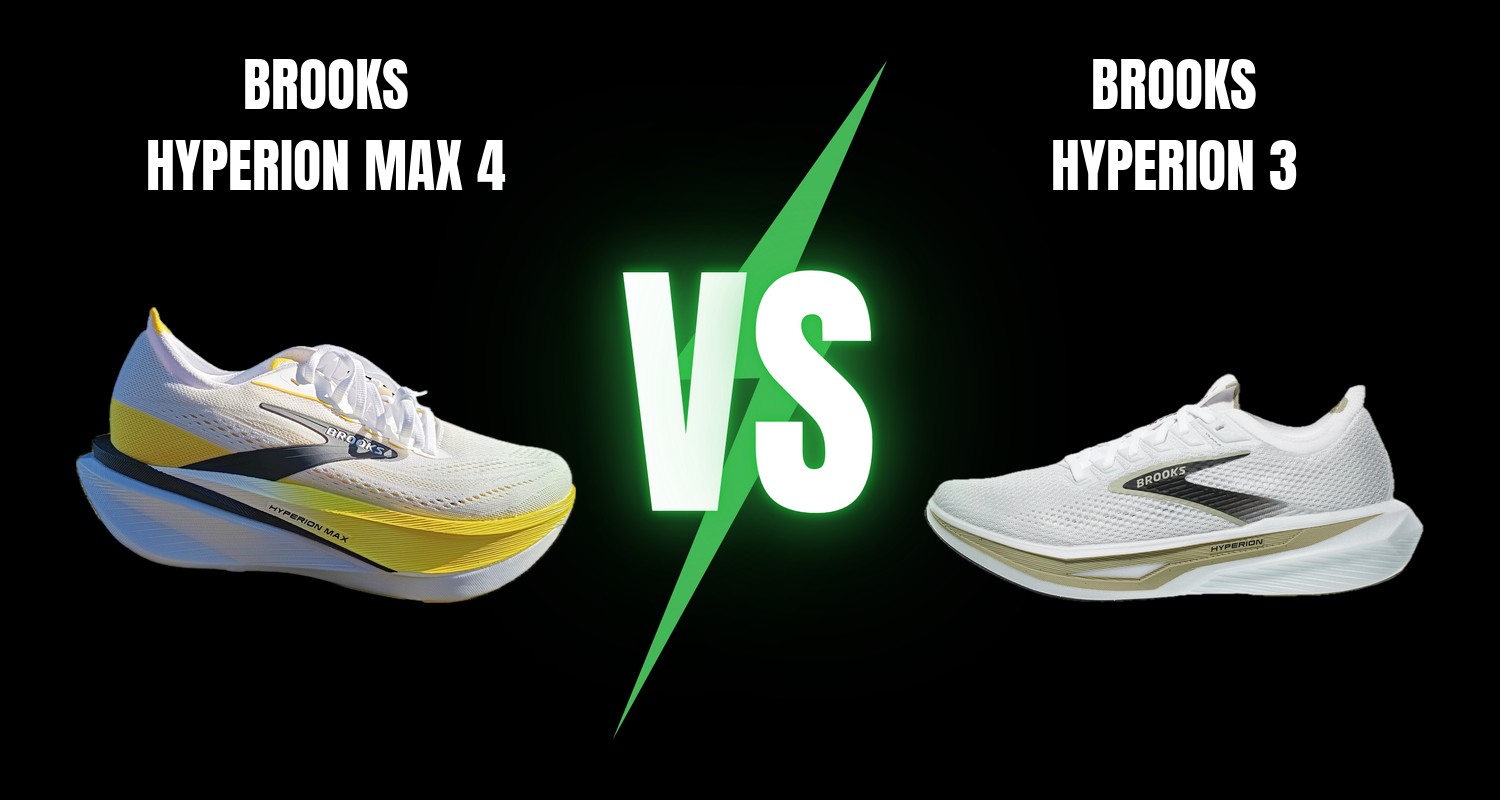
The Brooks Hyperion Max 4 and the Brooks Hyperion 3 both belong to the Hyperion line, which Brooks associates with speed. The Max 4 is a max-stack super trainer. The Hyperion 3 grew out of the Brooks Hyperion Tempo, and for a long time the series was the brand’s low, fast training shoe. With version 3, it moves closer to a light, versatile daily trainer.
Almost 40 g / 1.4 oz separates them: the Hyperion 3 is lighter. The Max 4 is noticeably taller, at both the heel and the forefoot, with a slightly lower drop.
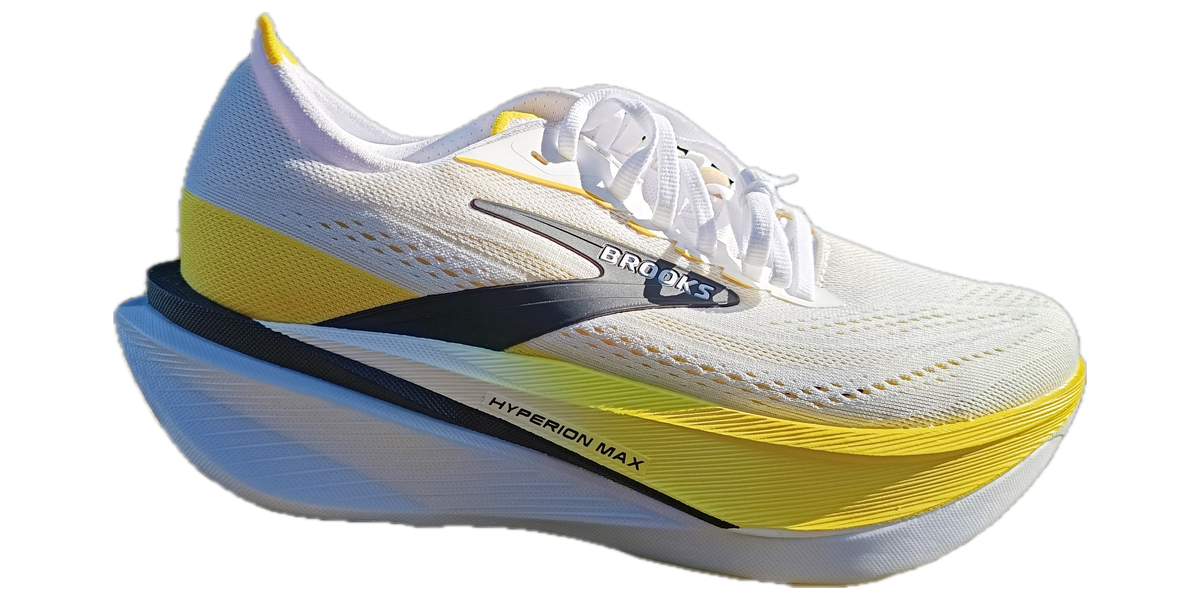
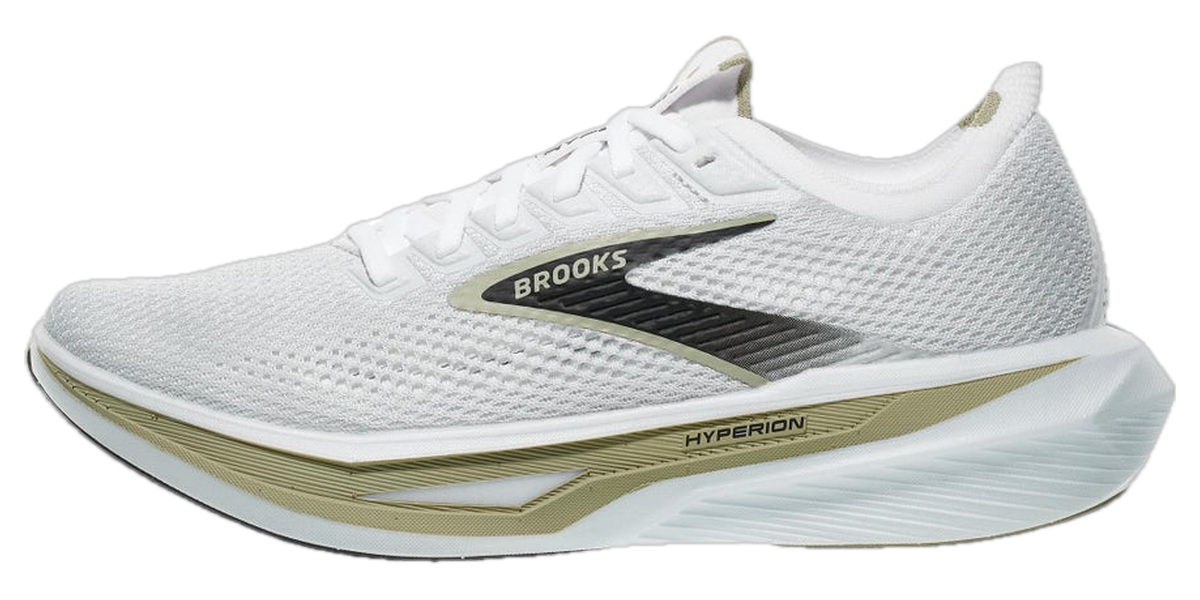
On the Max 4, a layer of DNA GOLD, a PEBA foam, sits on top of a layer of DNA FLASH v2, a supercritical EVA, with the SpeedVault nylon plate between the two. The Hyperion 3 uses only DNA FLASH v2, with no plate. Brooks added foam compared with the previous version, for a softer feel.
The Max 4 feels fairly firm at impact. Ground contact time is short, and its propulsion is aimed more forward than vertical. It comes alive when you pick up the pace: of the two, it’s the better fit for tempo workouts.
Underfoot, the Hyperion 3 is softer, and its ride stays smooth at slow and moderate paces. Its energy return comes up a little short for fast workouts.
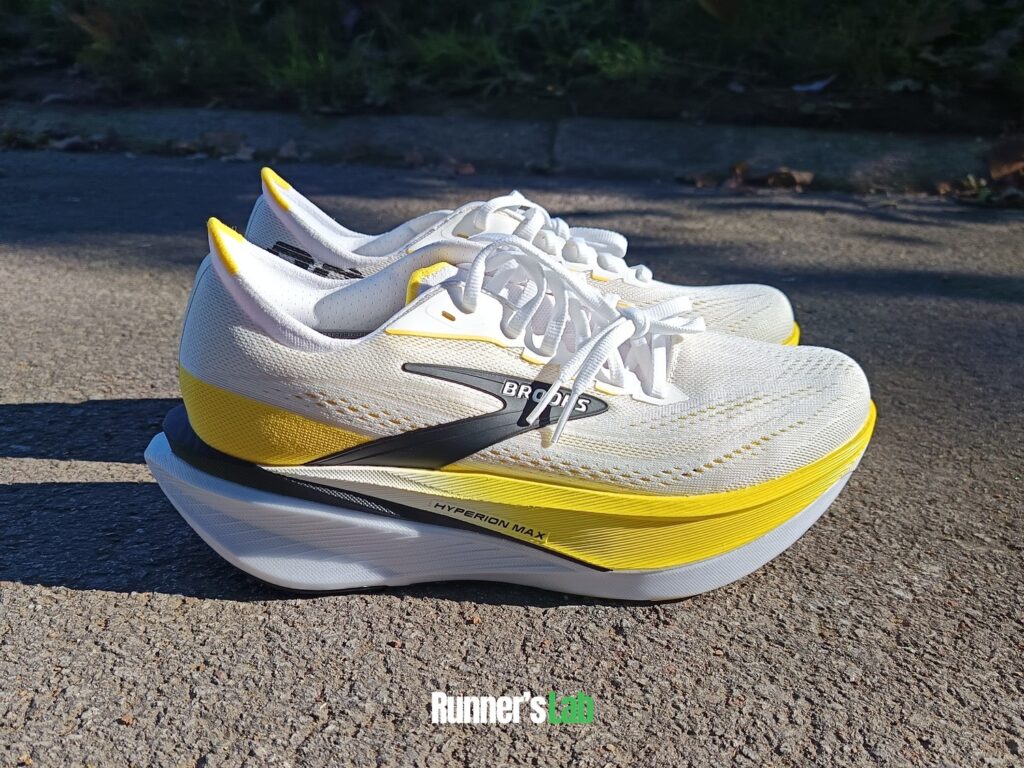
The Max 4’s height gives it excellent shock absorption. If you like firm cushioning, you can take it all the way to the marathon. The Hyperion 3’s shock absorption is more limited on long runs.
Neither shoe has a stability technology, and both are stable. The Max 4 gets its natural stability from its firm foam and wide base. On the Hyperion 3, the midsole flares out at the heel for a stable ride.
The Max 4’s triple jacquard knit upper gives very good lockdown and comfort, but breathability isn’t great with this thick fabric, and your feet can get hot in summer. The Hyperion 3 uses a well-ventilated double-layer jacquard mesh, with a stretchy gusseted tongue. Its midfoot and heel lockdown is excellent.
Both uppers share the same weakness: a narrow forefoot. On the Max 4, width and height at the toes are below average. The Hyperion 3’s toe box is low and pointed, with a stiff overlay above the toes. If you have wide feet, go half a size up on the Max 4, and try the Hyperion 3 on before you buy.
For durability, the Max 4 is built to pile up the miles: its thick layer of SpeedTack rubber gives it impressive longevity. The Hyperion 3 also has plenty of rubber on the outsole, and its durability is reliable.
Hyperion Max 4 vs Hyperion 3: Which Should You Choose?
Pick the Hyperion Max 4 for long runs with marathon-pace segments. Expect to pay about $60 more: it’s noticeably pricier.
The Hyperion 3 is the right choice if you want one pair for your everyday easy runs, or if you’re a beginner: with its pronounced rocker, the Max 4 isn’t necessarily a good fit.