

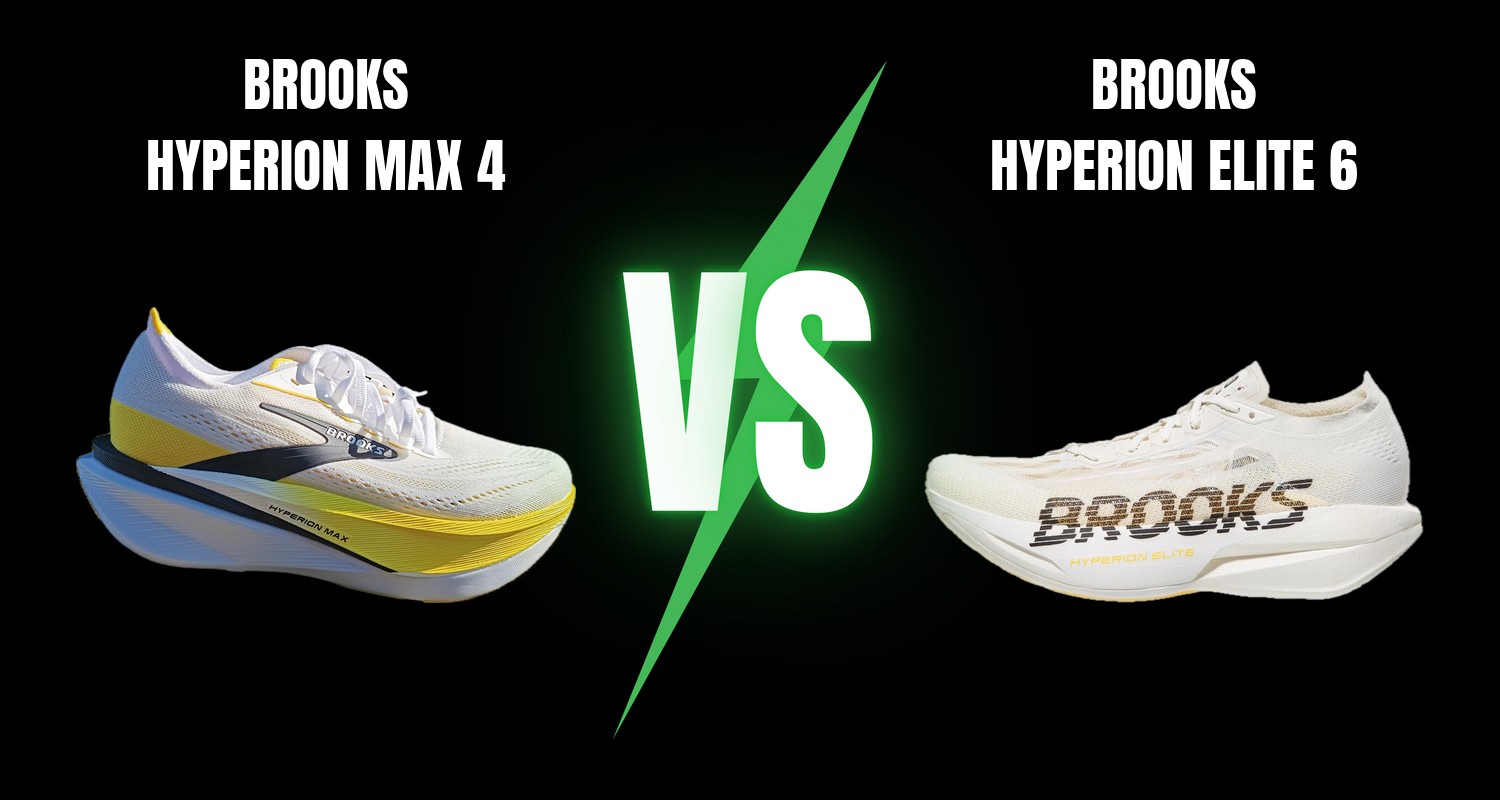
The Brooks Hyperion Max 4 and the Brooks Hyperion Elite 6 belong to the same line, which Brooks has always associated with speed and racing. They don’t do the same job, though: the Elite 6 is the top model in the line, a carbon shoe built for race day. The Max 4 is a nylon-plated super trainer, made to pick up the pace and pile up the miles.
On the scale, the gap is clear: the Hyperion Elite 6 is much lighter, by about 100 g / 3.5 oz. The Hyperion Max 4 is taller under the heel.
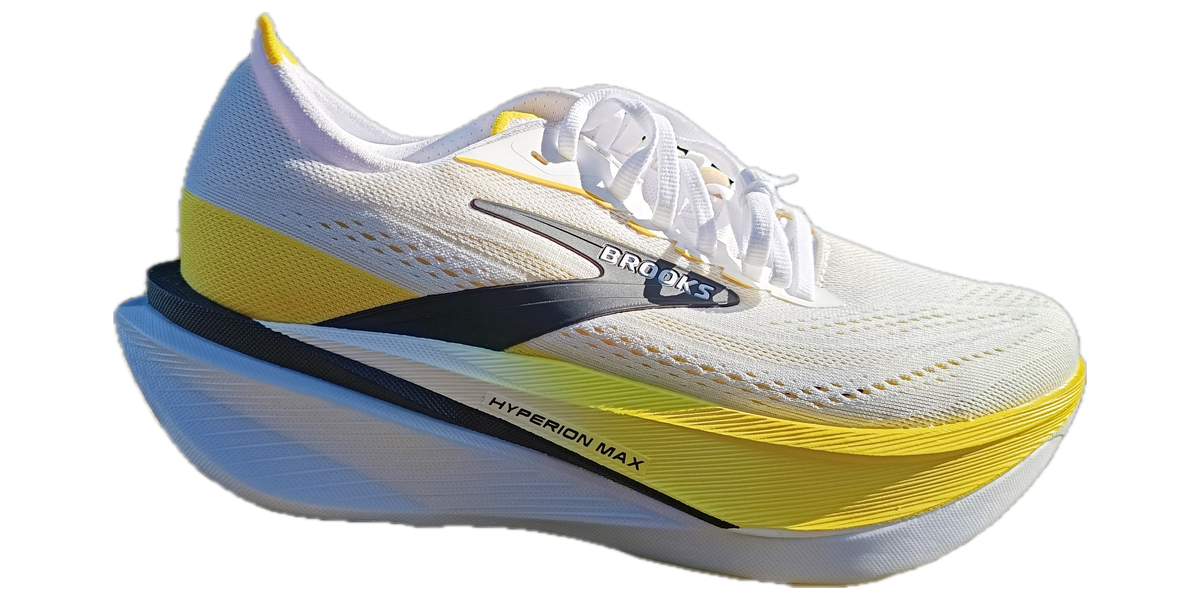
Both use DNA GOLD, Brooks’ PEBA foam, but not in the same way. On the Max 4, it forms the top layer, above a SpeedVault nylon plate. Below, a layer of DNA FLASH v2, a supercritical EVA, absorbs impacts and stabilizes the shoe.
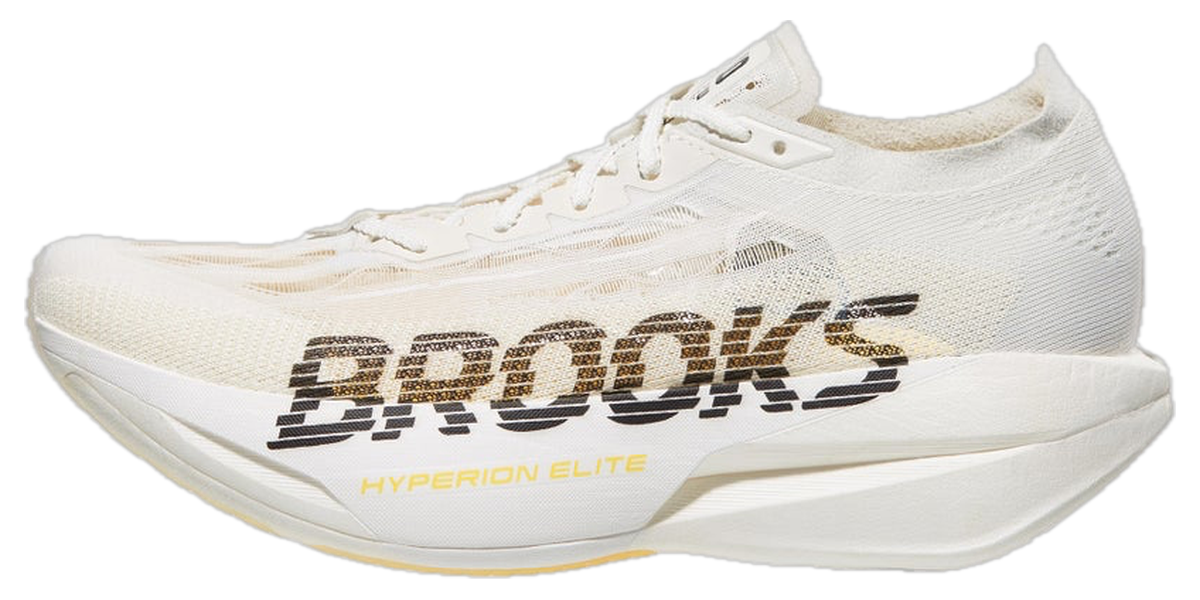
On the Elite 6, DNA GOLD runs through the whole midsole, in several densities. Brooks pairs it with a SpeedVault+ carbon plate with revised angles and updated RapidRoll rockers, to go faster.
The Max 4’s cushioning is firm. Ground contact time is short and propulsion is aimed forward. It comes alive when you pick up the pace, but it’s less enjoyable at slow paces. You feel its weight, and the firmness limits the bounce.
Cushioning on the Elite 6 is balanced, with aggressive propulsion. Unlike the Max 4, it stays comfortable at slow paces, on warm-ups and cool-downs alike.
The Max 4 is naturally very stable, thanks to its firm foam and wide base. The Elite 6 is stable too, with high midsole sidewalls that guide the foot.
Up top, the Max 4 uses a triple jacquard knit. It locks the foot down very well, but breathability isn’t great with this thick fabric, and your feet can get hot in summer. The fit is snug at the front: if you have wide feet, going half a size up is recommended. If in doubt, try it on before you buy.
On the Elite 6, the upper is a very open flat knit, far more breathable than the Max 4’s knit. The fit is snug, like a racing shoe, especially at the toes if you have wide or high-volume feet. At the heel, three nubbed pads lock the foot in. Heads-up: the minimalist collar can rub and cause a blister on the Achilles tendon.
Both shoes are durable. The Max 4 has impressive longevity, with a thick layer of SpeedTack rubber. The Elite 6 uses a lighter outsole, with very good durability.
Hyperion Max 4 vs Hyperion Elite 6: Which Should You Choose?
For racing, from the half marathon to the marathon, choose the Hyperion Elite 6. It’s noticeably pricier, about $75 apart, but it’s Brooks’ carbon shoe for setting personal bests.
In training, pick the Hyperion Max 4: long runs with marathon-pace segments, tempo workouts. It can also be a very good race-day alternative if you don’t want the stiffness of a carbon plate.