

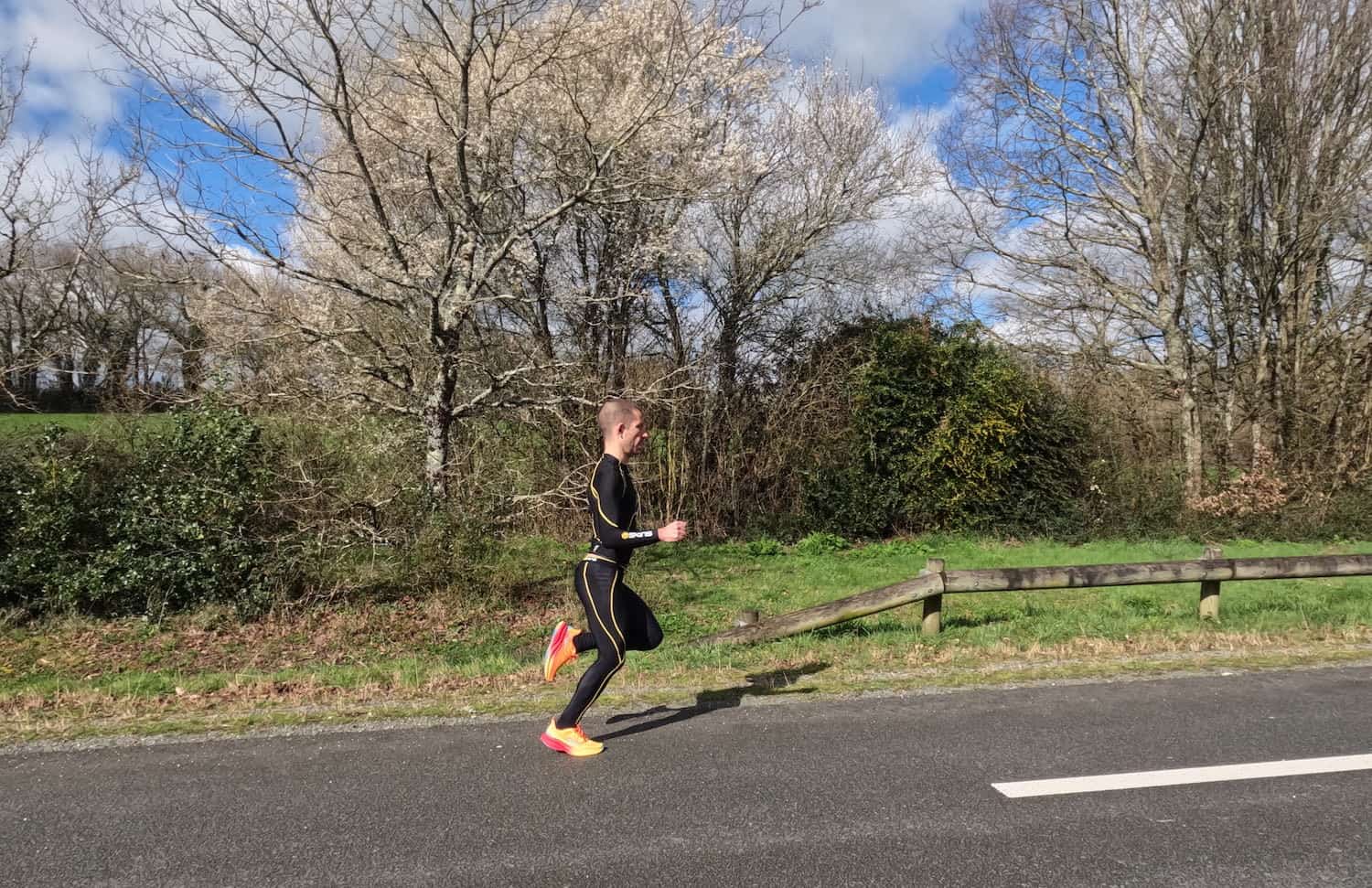
Our 11 Favorite Running Shoes (2025 Guide)
These are the best models for men and women according to our experts.
Note: this site exists thanks to your support. This article contains affiliate links and we receive a commission when you use them to make your purchases. This does not cost you anything extra and does not influence our reviews.

Finding the best shoes for your needs, whether you are a beginner or an experienced athlete, is sometimes a real challenge. It can be difficult to sort through the hundreds of running shoe models released every year. What’s more, there are so many different configurations it can make your head spin.
That’s why we’ve prepared this selection of the 11 best running shoes of 2025 (so far) with a variety of models that are universally praised.
If you are new to running, we recommend you take a look at our tips for choosing your first pair of shoes. For more experienced runners, you can find exactly the model you need by using the filters on our ranking pages (e.g. terrain, sole thickness, drop, distance, etc.).
Hesitating between two models? Use our comparison tool to choose easily.
Our Method
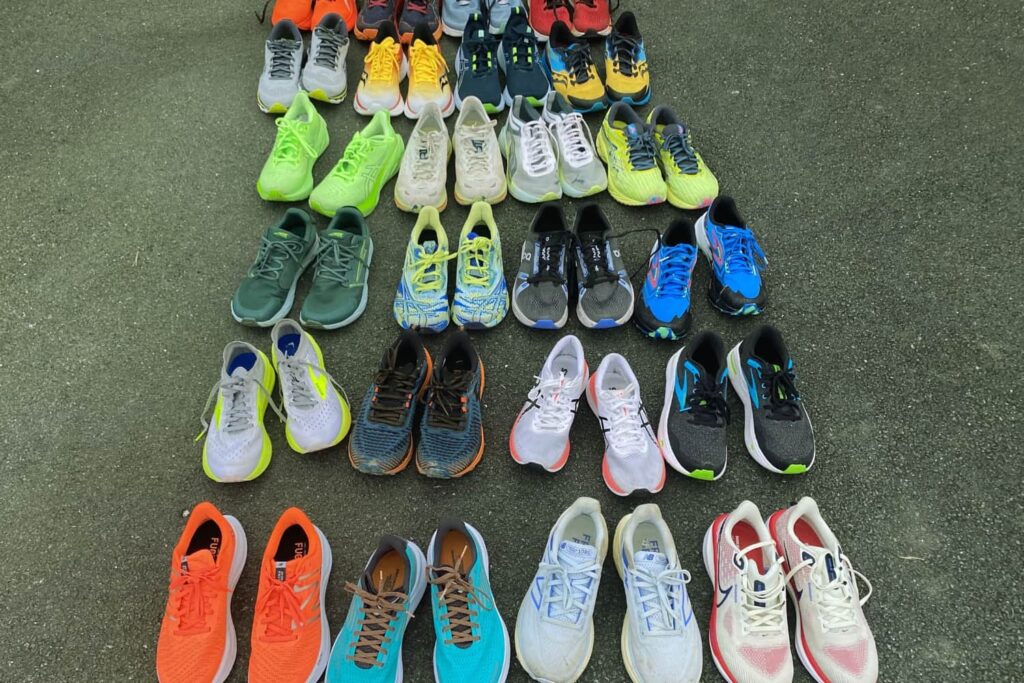
Since 2017, the Runner’s Lab team has been thoroughly evaluating different models by testing them meticulously and analyzing the opinions of experts and amateurs to validate our verdict and provide a consensus and an overall score. Indeed, the review of one person already offers a lot of information, but only a systematic review makes it possible to draw conclusions applicable to most runners.
Also, we verify the claims of brands and testers based on scientific evidence to clarify certain sensitive points such as the influence of pronation type, runner’s weight, shoe drop, and many others.
Our 2025 Selection
| Model | Sole (heel) | Drop | Weight | Cushioning | Plate | Best for |
|---|---|---|---|---|---|---|
Mizuno Wave Rider 29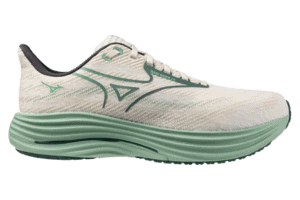 Check Prices → | 38.5 mm | 10 mm | 9.2 oz/261 g | Balanced | ✔ Nylon | Versatility (all scenarios) |
Asics Gel Nimbus 27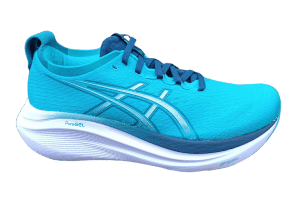 Check Prices → | 43.5 mm | 8 mm | 10.8 oz/305 g | Balanced | ❌ | Recovery, comfort runs |
Hoka Mach 6 Check Prices → | 29 mm | 5 mm | 7.7 oz/219 g | Firm | ❌ | Training and racing (5/10 km) |
Saucony Endorphin Speed 5 Check Prices → | 36 mm | 8 mm | 8.1/229 g | Balanced | ✔ Nylon | Fast workouts |
Adidas Adizero Evo SL Check Prices → | 36 mm | 6 mm | 7.9 oz/224 g | Balanced | ❌ | Fast workouts |
Asics Metaspeed Ray Tokyo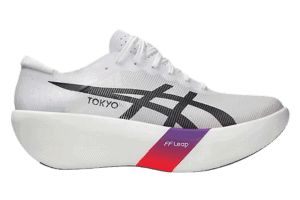 Check Prices → | 39.5 mm | 5 mm | 4.3 oz/121 g | Soft | ✔ Carbon | Racing (5 km to marathon) |
New Balance 1080 v14 Check Prices → | 38 mm | 6 mm | 9.3 oz/265 g | Soft | ❌ | Long runs |
On Cloudmonster 2 Check Prices → | 35 mm | 6 mm | 10.4 oz/295 g | Balanced | ✔ Nylon | Marathon comfort |
Brooks Revel 8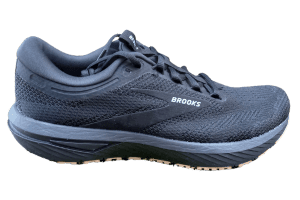 Check Prices → | 32 mm | 10 mm | 8.8 oz/250 g | Balanced | ❌ | Beginners |
Saucony Guide 18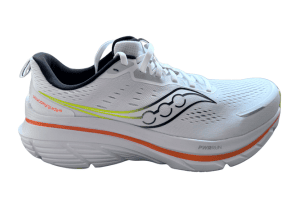 Check Prices → | 35 mm | 6 mm | 9.6 oz/271 g | Balanced | ❌ | Pronators |
BONUS : Brooks Ghost 17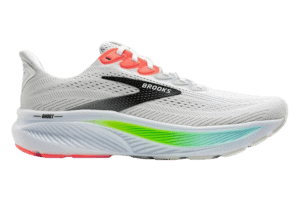 Check Prices → | 35.5 mm | 12 mm | 9.1 oz/259 g | Balanced | ❌ | Sustainability |
1. Mizuno Wave Rider 29: The Go-To Shoe for Everything

Key Features
38.5 mm sole (heel)/28.5 mm (forefoot)
261 g (m)/237 g (w)
Balanced cushioning, even a bit firm
All distances, daily training
Runners of all levels
Neutral stride
The Wave Rider is a major reference that deserves its excellent reputation. It’s a shoe that delivers versatility and durability with a touch of bounce so you can pick up the pace as you gain experience.
Beyond that, it’s a shoe that has managed to reinvent itself over time to stay relevant against modern shoes.
This version 29 offers a much more responsive cushioning than before and softer while keeping solid structure. In addition, the shoe is relatively light and continues to provide great comfort.
This is a shoe with a classic setup and feel. This makes it a good choice for runners looking for traditional, simple and effective shoes. Also, switching to a 10 mm drop makes it more accessible.
A very interesting option for daily training and long distances (10 km and beyond).
Pros
Cons
Read the full Wave Rider 29 review
2. Asics Gel Nimbus 27: The Most Comfortable

Key Features
High 43.5 mm heel stack, 8 mm drop
305 g (m)/265 g (w)
Balanced cushioning
Long distances at moderate pace
All levels
Vegan
Renowned for its unfailing comfort, the Asics Gel Nimbus 27 delivers a smooth ride. Its combination of Flytefoam Blast Plus Eco foam and classic Gel technology effectively absorbs shock.
Its fit provides precise and comfortable support. Overall, it’s a top pick that runners appreciate for its excellent stability, ideal for easy runs at a steady state pace.
While it lacks a bit of responsiveness for speed-focused sessions, its comprehensive and robust design combined with reliable traction makes it a perfect ally for your recovery runs and easy workouts.
In short, the Asics Gel Nimbus 27 is a safe bet for runners seeking a comfortable and protective shoe to recover from tough sessions.
Pros
Cons
Read the analysis of the Asics Gel Nimbus 27
3. Hoka Mach 6: The Short Run Booster (5 or 10 km)

Key features
29 mm sole (heel)/24 mm (forefoot)
Low drop
219 g (m)/189 g (w)
Firm cushioning
Daily training, short races
Beginner and experienced athletes
Neutral stride
At 219 g (m), it is undeniably one of the lightest training shoes right now.
After a few disappointing versions, Hoka has succeeded in turning this model into a benchmark for comfort, versatility, and energy return. We recommend it for any fast session like tempo runs.
The main negative point of the previous version, the too-fragile exposed EVA foam, has been resolved by adding rubber reinforcements to protect the sole from abrasion. So, it’s a shoe that can go the distance!
Its cushioning is a bit firm underfoot, but that’s a good feature for runners seeking snappy propulsion on a 5 or 10 km.
However, be aware: the fit is narrow for wide feet.
Our testers all agree: the Mach 6 is an obvious choice if you don’t know which Hoka One One model to choose.
Pros
Cons
Read the analysis of the Hoka Mach 6
4. Saucony Endorphin Speed 5: Fast and Versatile Trainer

Key Features
High stack of 36 mm (heel)/28 mm (forefoot)
236 g (m)/206 g (w)
Balanced cushioning
All distances, all paces
Runners with a bit of experience
Neutral stride
If you had to pick just one, it would probably be this one. That says it all! And yet, we’re not exaggerating: this is a model that won over our entire team. And we’re not the only ones who praise the Endorphin Speed – these have become cult running shoes and many runners swear by them.
Why? It all comes down to their perfect versatility combined with a good dose of responsiveness for daily workouts. Thanks to clever technologies — nylon plate, PWRRUN foam, and SPEEDROLL rocker — they’re able to go very fast and help you save your energy.
The fit is also impressive, with a technical mesh that is comfortable and roomy while locking the foot in well thanks to an internal layer. The breathability of the fabric is also very good.
We recommend these lightweight shoes for athletes who already have a bit of experience and are looking for the ultimate model to do everything in training, even to run races.
Pros
Cons
Read the test of the Saucony Endorphin Speed 4
5. Adidas Adizero Evo SL: An Incredibly Fun Surprise!

Key Features
36 mm sole (heel), 30 mm (forefoot)
224 g (m)/188 g (w)
Balanced cushioning
All levels, up to half-marathon
Neutral stride
With the Adidas Adizero EVO SL, the German brand finally makes the super shoe sensation accessible… without the outrageous price. A true little sister to the Adios Pro Evo 1, the EVO SL uses the 100% Lightstrike Pro foam in a daily training shoe — a first for Adidas.
The result? An incredibly light (224 g), simple and fun pair that surprises with its versatility. No carbon plate here, but an effective rocker that propels your stride naturally. Whether on easy runs, long outings, or tempo sessions, the shoe is always up for it with a real bounce and exhilarating energy.
The Continental rubber grip is solid on dry ground, but can get slippery when wet. The minimal mesh upper ensures breathability and comfort, and is best suited to average to wide feet. The fit is trickier for narrow feet, and the somewhat firm cushioning limits its use for the marathon.
Despite these details, the EVO SL is a true revelation: accessible, versatile and devilishly enjoyable to run in. In short, a people’s super shoe that puts a smile on every run — without emptying your wallet.
Read the full analysis of the Adidas EVO SL
6. Asics Metaspeed Ray Tokyo: The Lightest and Fastest Shoes in the World.

Key Features
39.5 mm sole (heel)/34.5 mm (forefoot)
121 g (men), 115 g (women)
Dynamic and soft cushioning with carbon plate
All distances, competition
Experienced athletes with midfoot or forefoot strike
With only 121 g, the Asics Metaspeed Ray Tokyo is a technological gem made possible by the new FlyteFoam Leap foam (lighter, more responsive and softer than previous generations) and a partial carbon plate under the forefoot.
Result: explosive responsiveness, a naturally propelled stride, and an almost barefoot sensation.
But this rocket isn’t for everyone. The Ray’s design is clearly aimed at fast runners landing midfoot or forefoot. For them, the bounce is phenomenal, the cushioning surprisingly soft despite its feather weight, and the shoe can hold up for marathon distances.
However, heel strikers will miss out on the benefits of the carbon plate and may experience a lack of stability. For a more accessible alternative, it’s better to turn to the Metaspeed Sky or Edge.
Despite its cutting-edge design, the Ray is more durable than some competitors like the Adios Pro Evo, but it remains best reserved for races and key sessions.
In summary, the Asics Metaspeed Ray Tokyo is the ultimate shoe to break your records, provided you have the right stride and level.
Pros
Cons
Read the full analysis of the Metaspeed Ray Tokyo
7. New Balance 1080 v14: Comfortable Cushioning for Your Long Runs

Key Features
38 mm sole (heel), 32 mm (forefoot)
265 g (m)/256 g (w)
Balanced cushioning
Daily training
Runners of all levels
Neutral stride
You don’t like the firmness of the Mizuno Wave Rider? Or its high drop? In that case, the New Balance Fresh Foam X 1080 v14 is a good alternative option.
Indeed, it is a versatile model that features balanced and comfortable cushioning for long distances and daily sessions.

New Balance has finally managed to bring more bounce to its flagship shoe by reducing the softness of the cushioning. Rest assured, comfort is still there and you’ll have no trouble covering longer distances comfortably.
It’s also worth noting that grip is much better thanks to the addition of rubber on the outsole.
Finally, the shoe is relatively light at 265 g, even if we can regret a slight weight increase. Still, not bad for this type of shoe considering the thick sole and its durability. Well done New Balance!
Pros
Cons
8. On Cloudmonster 2: Comfortable Carbonless Marathon Pick

Key features
Sole: 35 mm (heel), 29 mm (toes)
Balanced cushioning
Low 6 mm drop
Weight: 295 g (m), 245 g (w)
All distances
The Swiss brand On Running took a while to conquer the running world, with many judging the brand’s reputation for durability and comfort as overrated. And indeed, some models can be disappointing.
However, there has been a clear improvement in the past two years, especially with this On Cloudmonster 2 which stands out for its comfort and versatility.
Its thick sole with Clouds and Helion foam provides generous and stable cushioning for good shock absorption over long distances. Although less dynamic and heavier than a carbon plate shoe, it offers appreciated versatility to support you on race day as well as throughout your training.
In short, the On Cloudmonster 2 is an excellent alternative for marathoners who prioritize comfort over performance.
Pros
Cons
Read the On Cloudmonster 2 review
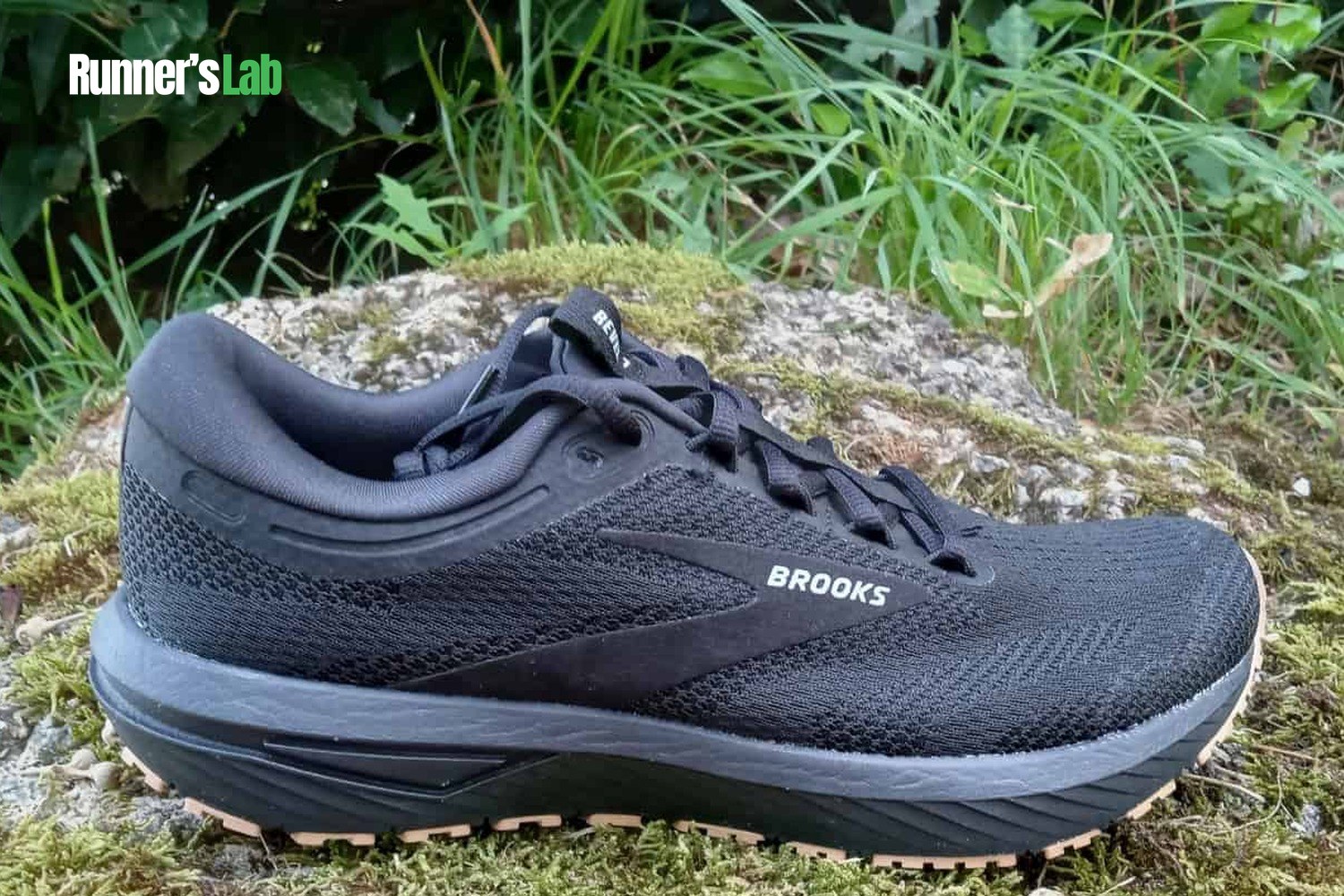
9. Brooks Revel 8: An Affordable and Complete Option for Beginners
Key Features
32 mm sole (heel)/22 mm (forefoot)
250 g (m)/227 g (w)
Moderate density cushioning
Short and medium distances, ideal for daily training
100% vegan
Beginner and experienced runners
Neutral stride
Great surprise and relatively little known, the Brooks Revel 8 is our little secret that we are happy to share with you.
It offers great comfort and good versatility for runs of any type. Plus, at 250 g (men’s version), it is a lightweight shoe.
Testers unanimously love it and, as you’d expect from Brooks, the value for money is unbeatable thanks to a reliable and efficient design! For just 100 euros (or even less on sale), you get a complete shoe that has nothing to envy from other more expensive models.
This is a very good option to start running. In addition, these are versatile sports shoes that may be suitable for other activities besides running.
Pros
Cons
Read the full review of the Brooks Revel 7
10. Saucony Guide 18: Comfortable Stability

Key Features
Sole 35 mm (heel)/29 mm (metatarsal)
271 g (m)/258 g (w)
Balanced cushioning
Training (all distances)
Overpronating runners
We are always careful when recommending shoes for pronators in the absence of solid scientific evidence about their effectiveness in reducing injury risk. However, the trend in recent years has been towards what can be called inherent or neutral stability, without rigid correction on the medial part of the foot.
Thus, the Saucony Guide 18 derives its stability from its large contact area, wide base, and side walls that guide the foot without forcing it. This design makes it suitable for pronators.
Despite its stability and thick sole that offers great comfort, the Saucony Guide 17 surprises with its lightness. Its soft cushioning and dynamic geometry ensure enough responsiveness for many training scenarios like long runs.
In short, a very good option for overpronators looking to combine stability and agility for their daily sessions.
Pros
Drawbacks
BONUS: Brooks Ghost 17, The Sustainable Option

Key Specs
Sole: 37 mm (heel), 27 mm (forefoot)
Drop: 10 mm
Weight: 276 g (m), 253 g (w)
Balanced cushioning
Any distance
Vegan
The Ghost is not the most impressive shoe from this selection. However, it is a reliable model that has proven its worth over the years. Many runners have used it at some point during their progress and have fond memories of it, especially when they were starting out.
This new version is balanced underfoot, which offers good structure for a stable run. Shock absorption is comfortable thanks to the fairly thick sole and the new DNA Loft v3 material to support you during all your sessions.
Moreover, the 10 mm drop makes it suitable for more people while providing extra cushioning under the forefoot.
As for the upper, the mesh offers precise and secure support while being ventilated for added comfort in summer.
We wanted to introduce this model above all because it is one of the only ones on the market to achieve carbon neutrality (on top of being vegan). With climate change, running brands must make efforts, so it is important to reward those, like Brooks Running, who go further than others for the environment and animal welfare.
Pros
Cons
What About the Other Shoes?
Obviously, with 10 spots (plus a bonus one) for hundreds of available models, you have to make a choice. Some very popular shoes like the Saucony Ride 18 or the Nike Pegasus 41 are not included.
That doesn’t mean they aren’t good shoes. Simply, we think our selection offers more exciting options with better overall qualities.
On the other hand, we haven’t included zero drop shoes or minimalist models, which are not necessarily accessible to everyone.
Our Guide to Choosing the Right Pair for You

What Are Road Running Shoes?
These shoes are made for running on asphalt or slightly uneven paths. Their soles are suitable for both dry and wet surfaces.
Thus, they are ideal for running in the city. For dirt paths or slightly technical trails, it’s best to go for special trail shoes. If you often run in the rain, even on the road, it can make sense to choose waterproof shoes (often Gore-Tex).
It’s also possible to use your shoes on a treadmill, but it’s better to choose a model that’s well suited.
Comfort First
If you’re a beginner, choosing a shoe can take time. A simple try-on in store by jogging up and down the aisles isn’t enough.
You’ll need at least one run to make sure there’s no discomfort or pain.
For a first pair of shoes, we recommend going for all-purpose running shoes for neutral stride.

The #1 criterion should be comfort. And we’re not just saying that: a scientific study [1] showed that shoe comfort increases running economy. In other words, the more comfortable you are, the faster you go!
The Nike Pegasus and Saucony Ride are safe choices for beginners. For more experienced runners, you can choose your shoes according to your preferences, your use (training vs. performance/racing), and your goals (e.g. speed records, well-being).
Cushioning, Yay or Nay?
Roads are harder on the joints than dirt tracks. In fact, dirt naturally provides cushioning that asphalt doesn’t have. So, it can be beneficial to opt for some cushioning, even if it’s light.
Minimalist (or barefoot) running and asphalt aren’t incompatible (with one notable exception, see below) but in the beginning, it’s better to stick to softer surfaces like easy trails, sand, or grass.
However, cushioning remains a recurring debate with no clear answer. The only thing you need to remember (tell your friends) is to avoid minimalist shoes (very thin soles, less than 15 mm), if you weigh more than 71 kg.
Indeed, that’s the only conclusion based on a scientific study (randomized controlled trial).

Otherwise, it’s common to hear that you need good cushioning if you’re a heavy runner, but it’s more a question of durability than injury risk. So, if you weigh over 80 kg, your shoes are more likely to last longer if they’re well-cushioned.
However, you shouldn’t just look at the thickness of the sole, but also the density of the midsole and the foam used: the higher the density (think TPU, Pebax), the better the durability. Conversely, a low-density (i.e. soft) midsole, like EVA foam, is generally less durable.
Don’t Worry (Too Much) About Your Gait
You may have noticed we spared you all the talk about stride type and arch (e.g. flat feet and pronation, high arch and supination).
Why? Simply because there is little scientific evidence that stability shoes can reduce injury risk.
However, it’s true that overpronation is linked to a slightly higher injury risk [2, 3]. So you need to be careful. But for that, we recommend seeking advice from a healthcare professional specializing in running rather than a store salesperson.
If in doubt, we recommend going for shoes with a neutral stride.
For more advice, check out our article: How to choose your running shoes
Major 2025 Market Trends
More Carbon
Originally reserved for race shoes, carbon is now featured in more and more shoes, even for daily training. The fact is, these shoes work: they help you beat your personal bests by allowing you to run more efficiently.

Shoes Are Getting Lighter
The result of the technological race brought on by the arrival of carbon shoes is that we’re seeing the emergence of new production techniques (e.g. supercritical foam) that benefit daily training models. Just look at the NB 1080, which now weighs 250 g compared to over 300 g two years ago!
Full-On Max Cushion
The great popularity of Hoka inspired other brands to follow suit: shoe soles are getting thicker and thicker.
While a 30 mm stack height seemed high a few years ago, it’s now common for manufacturers to go well beyond that!
Cautious Steps Toward Sustainability
In the context of the climate crisis, brands are starting to make some efforts to reduce the carbon footprint of their running shoes. They’re trying to use more recycled materials.
Finally, few people know this, but many running shoes use animal materials. So it’s worth mentioning Hoka and Brooks, who offer collections that are almost entirely vegan.
Where to Buy?
We trust our following partner stores:
References
Improved footwear comfort reduces oxygen consumption during running
Luo et al. (2009)
Footwear Science
https://www.tandfonline.com/doi/abs/10.1080/19424280902993001
A Study on the relation between height of medial longitudinal arch and sport injuries in lower limb of professional runners by using Navicular Drop and Arch Index clinical tests
Divandari and Vakili (2014)
Journal of American Science
https://www.jofamericanscience.org/journals/am-sci/am1003s/007_24004am1003s14_50_61.pdf
Foot posture as a risk factor for lower limb overuse injury: a systematic review and meta-analysis
Neal et al. (2014)
Journal of Foot and Ankle Research
https://www.ncbi.nlm.nih.gov/pmc/articles/PMC4282737/