

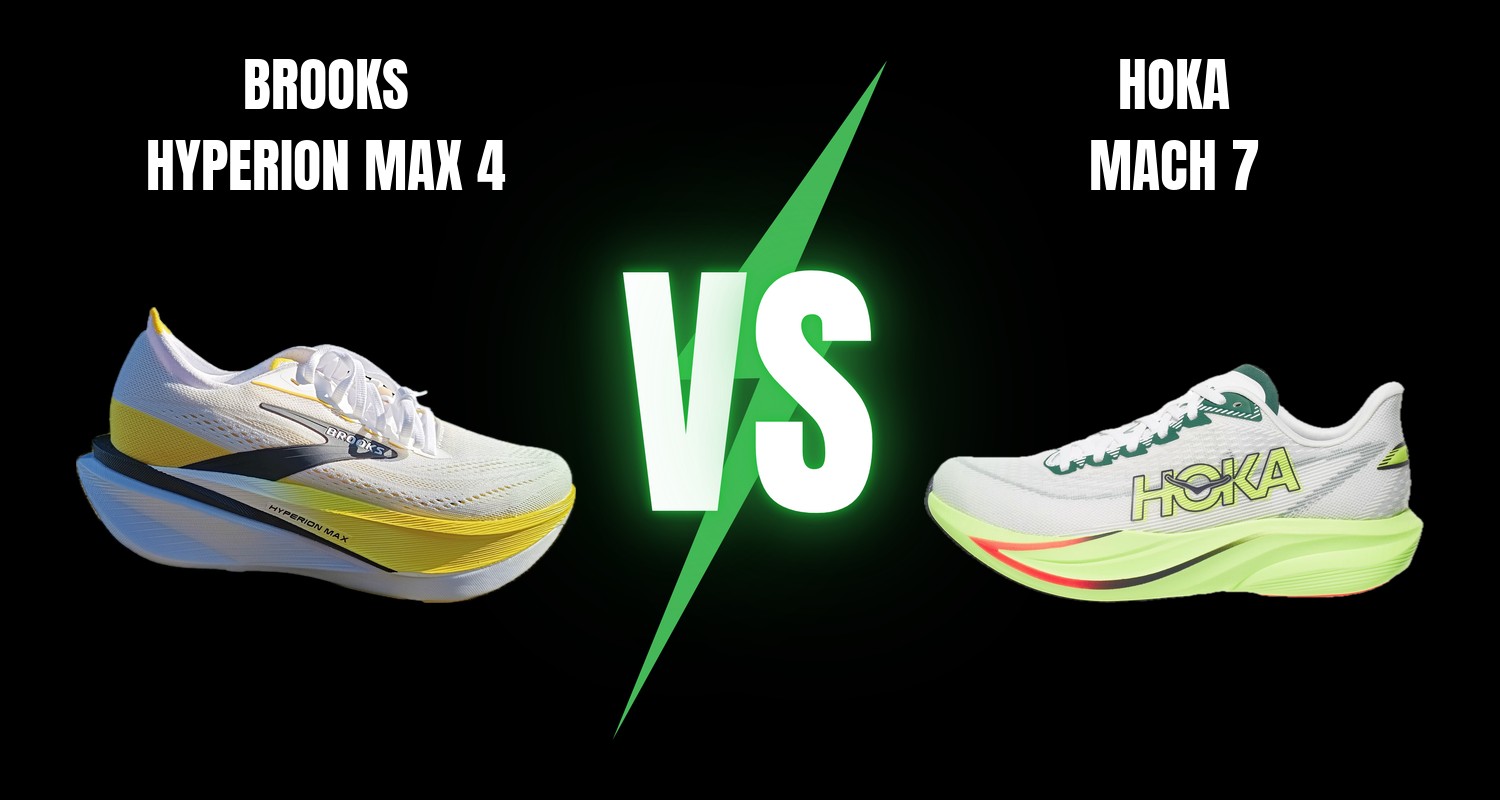
The Brooks Hyperion Max 4 pairs a nylon plate with max cushioning, while the Hoka Mach 7 keeps a plate-free setup for fast workouts.
Under both the heel and the forefoot, the Hyperion Max 4 is noticeably taller. It’s also much heavier, by nearly 70 g / 2.5 oz on the scale.
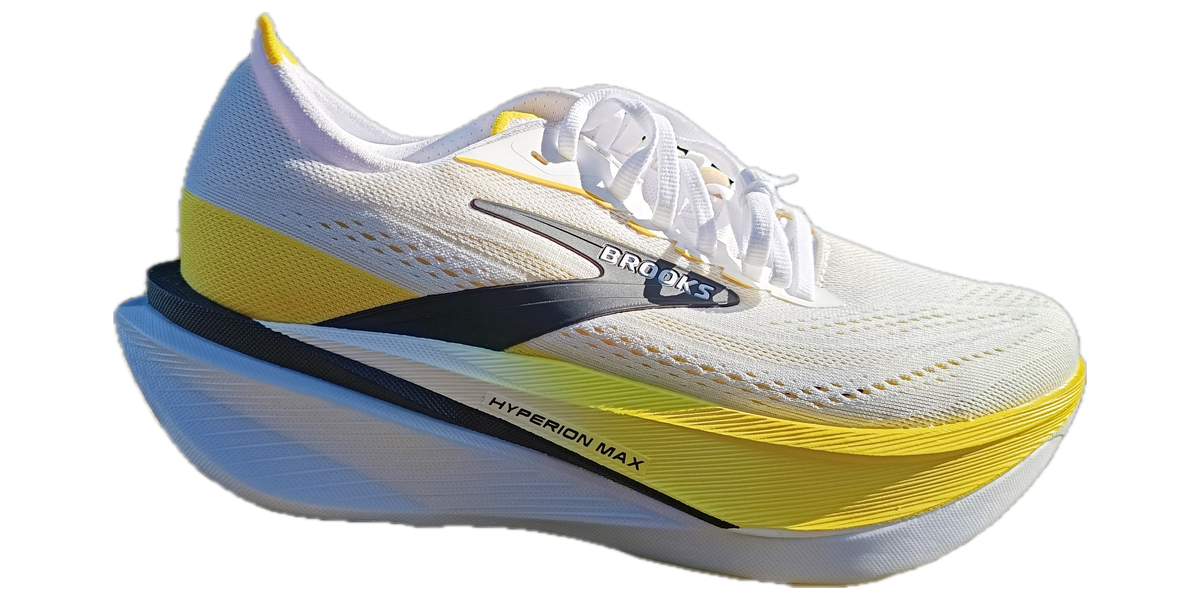
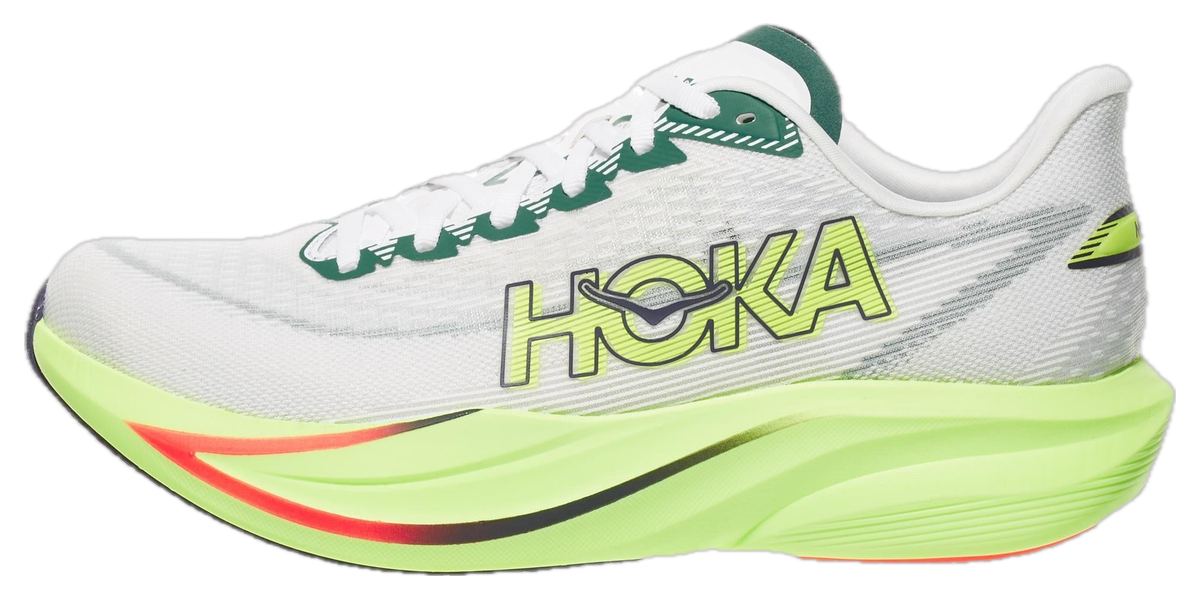
Brooks combines two foams in its midsole: DNA GOLD, a PEBA foam, on top, and DNA FLASH v2, a supercritical EVA, underneath. The SpeedVault nylon plate sits between the two. Hoka sticks with a supercritical EVA foam, in a new formula, and skips the plate. On the Mach 7, choosing an older-generation foam for a model built for speed is disappointing.
The Hyperion Max 4 is more responsive: DNA GOLD and the plate give it very good responsiveness, and the RapidRoll rocker makes for smooth, quick transitions. Its weight can show at the fastest paces, though. The Mach 7 owes its responsiveness mostly to its low weight and aggressive rocker, which drive you forward well. But its foam limits energy return.
At impact, both shoes feel fairly firm. The Hyperion Max 4’s shock absorption is excellent for running longer: if you like that feel, you can take it all the way to the marathon. The Mach 7’s is very good, but its fairly firm feel may cap it at the half marathon, depending on your preferences.

The Hyperion Max 4 is a bit more stable thanks to its wide base and firm foam. On the Mach 7, the snug upper and fairly firm foam make for a secure, stable ride.
With its many micro-perforations, the Mach 7’s Creel jacquard mesh upper is more breathable. The Hyperion Max 4’s triple jacquard knit is a thick fabric: your feet can get hot in summer, but it protects very well in cold weather. Foot lockdown is very good on both models.
Brooks and Hoka both went for a close-to-the-foot fit. The Hyperion Max 4’s forefoot is below average in both width and height. On the Mach 7, the fit didn’t win everyone over, especially at the forefoot and the instep. If you have wide or high-volume feet, try them on before buying or go up half a size.
Traction works well on both outsoles, even on wet surfaces: SpeedTack rubber on the Brooks, Durabrasion on the Hoka.
Hyperion Max 4 vs Mach 7: Which Should You Choose?
Choose the Hyperion Max 4 if you want a shoe for long runs with marathon-pace segments and for tempo workouts. It’s noticeably pricier (about $55 more).
Go for the Mach 7 for fast workouts and racing at 10K or half marathon distance. If you’re a beginner, be careful with both: their rockers aren’t necessarily suited to new runners.